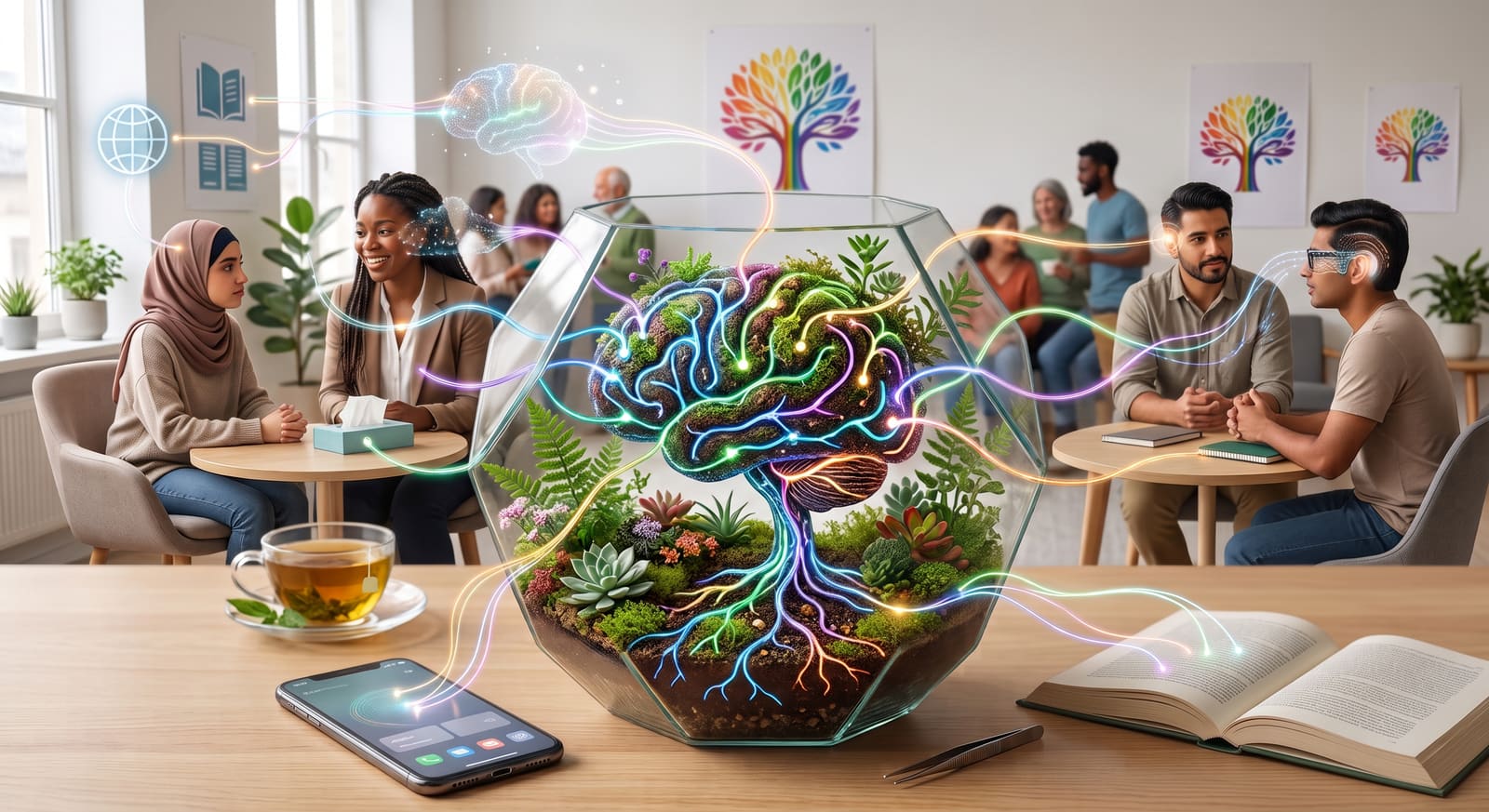
Topic Understanding
Our mental health is shaped by more than what happens inside our minds. Family relationships, community, work, finances, physical health, social connections, culture, and personal experiences can all influence emotional well-being.
For people from diverse backgrounds, these experiences can also intersect with race, ethnicity, religion, language, gender, sexual orientation, disability, immigration history, socioeconomic circumstances, and other parts of identity.
This does not mean that diversity itself causes mental health problems. Instead, the environments people live in and the experiences connected to their identities can affect stress, belonging, access to care, and the way mental health concerns are understood.
Understanding diversity in mental health can therefore help people recognize why two individuals experiencing similar circumstances may need very different kinds of support.
Key Highlights
- Diversity itself is not a mental health disorder or an inherent cause of poor mental health.
- Cultural identity can influence how people understand, describe, and respond to emotional distress.
- Discrimination, social exclusion, financial barriers, and unequal access to healthcare can contribute to mental health disparities.
- Culturally responsive therapy considers a person's individual background without making assumptions based on identity.
- Finding a therapist who listens respectfully and understands the importance of cultural context can make conversations about mental health more comfortable.
What Does Diversity in Mental Health Mean?
Diversity in mental health refers to recognizing that people have different identities, backgrounds, experiences, values, and circumstances that may influence how they experience and approach mental health.
Diversity can include:
- Race and ethnicity
- Nationality and immigration background
- Language
- Religion and spirituality
- Gender identity
- Sexual orientation
- Disability
- Neurodivergence
- Age and generation
- Socioeconomic background
- Family structure
- Education and occupation
- Geographic and community background
- Cultural traditions and values
These characteristics do not determine someone's mental health.
Instead, they can provide context for understanding a person's experiences.
For example, someone who has recently immigrated to the United States may be managing several changes at once: adjusting to a new environment, maintaining relationships with family members in another country, communicating in a second language, and building a new social network.
Another person from the same country may have an entirely different experience.
That is why culturally responsive mental health care should begin with listening to the individual rather than making assumptions about a group.
How Can Cultural Differences and Mental Health Be Connected?
Culture can influence how people understand emotions, relationships, family responsibilities, spirituality, and mental health treatment.
For some people, talking openly about depression or anxiety may be familiar. For others, emotional difficulties may initially be described as exhaustion, sleep problems, physical symptoms, difficulty concentrating, irritability, or feeling overwhelmed.
Culture can also influence whether someone feels comfortable asking for professional help.
Family beliefs, community expectations, religious perspectives, previous experiences with healthcare, language, and concerns about stigma may all be relevant.
This does not mean that every person from a particular culture will think or behave the same way.
Rather, cultural background can be one piece of the larger picture a mental health professional considers when getting to know a client.
Diversity and Mental Health Disparities
One important part of the conversation is mental health disparities.
A disparity does not necessarily mean that a particular group is inherently more vulnerable to mental illness. Differences in mental health outcomes or access to treatment can be influenced by social and structural conditions.
The CDC identifies several factors that can affect mental health, including interpersonal and institutional discrimination, limited access to healthcare, housing or education, reduced economic opportunities, social isolation, and other adverse experiences. Strong social connections and access to stable resources can serve as protective factors.
Access to mental health services can also vary between racial and ethnic groups. NIMH has documented differences in mental health service use and identified cost, insurance coverage, and other barriers as important considerations when understanding why people may not receive care.
These differences should not be interpreted as evidence that one community "cares more" or "cares less" about mental health.
A person's ability to obtain support can depend on whether appropriate services are affordable, accessible, culturally responsive, trusted, and available in a form that fits their circumstances.
How Discrimination Can Affect Mental Health
Discrimination is one example of how social experiences can intersect with mental health.
A person may encounter discrimination at work, school, in healthcare, within their community, or in personal relationships.
Experiences can include:
- Being treated differently because of race or ethnicity
- Religious discrimination
- Racism or racial bias
- Homophobia or transphobia
- Ableism
- Language-based discrimination
- Stereotyping
- Social exclusion
- Being repeatedly asked to explain or defend one's identity
Not everyone who experiences discrimination will develop a mental health condition. However, discrimination can be a meaningful source of stress and can occur alongside other challenges.
The CDC identifies interpersonal and institutional discrimination as social factors that can increase the possibility of poor mental health.
The emotional impact may not always be obvious
Someone experiencing discrimination may not immediately describe themselves as "traumatized" or "anxious."
Instead, they might notice:
- Feeling tense before entering certain environments
- Constantly thinking about how others perceive them
- Difficulty trusting certain institutions
- Feeling isolated
- Becoming emotionally exhausted
- Avoiding situations where discrimination has occurred before
- Feeling pressure to change how they speak or behave
These reactions deserve thoughtful attention rather than assumptions.
How Culture Can Influence the Way Mental Health Concerns Are Expressed
People do not always use clinical terminology to describe emotional distress.
One person might say:
"I've been anxious for months."
Another might say:
"I can't relax anymore."
Someone else might explain:
"I feel pressure in my chest whenever I think about work."
Another person may focus on headaches, poor sleep, irritability, or difficulty concentrating.
The important point is that mental health professionals need to understand the person behind the description.
Cultural and linguistic differences can sometimes influence how symptoms are described and how people understand the meaning of those symptoms. NIMH research has also highlighted the importance of racial, ethnic, and cultural differences when considering mental health service needs and access to appropriate care.
A culturally responsive therapist can explore these differences without assuming that a particular way of expressing distress means something specific.
Why Culturally Responsive Therapy Matters
Culturally responsive therapy means considering cultural and social context when it is relevant to a person's mental health, while recognizing that every client is an individual.
A therapist may explore questions such as:
- What does mental health mean to you?
- How does your family understand what you're experiencing?
- Are there cultural or religious beliefs that influence how you approach therapy?
- Have you experienced discrimination connected to this concern?
- Are family or community expectations contributing to your stress?
- What values are important to you when deciding what you want to change?
- Is there a language or communication style that feels more comfortable?
These questions can help create a fuller picture of the person's experience.
Culturally responsive care does not mean that the therapist assumes they already understand someone's culture.
In many situations, the more helpful approach is curiosity and humility: asking, listening, checking assumptions, and allowing the client to explain what their identity means to them.
Does Culturally Responsive Therapy Work?
Research on culturally adapted psychological interventions is encouraging, although it is not appropriate to assume that every cultural adaptation will work equally well for every person or condition.
A 2021 systematic review of psychological interventions adapted for ethnic minority groups found evidence of symptom reduction for adapted interventions compared with non-adapted active treatments, while also noting that many studies incorporated multiple adaptations, making it difficult to determine which specific changes were responsible for the benefits.
Another systematic review and meta-analysis examining culturally adapted psychotherapies for depression found benefits compared with control treatments, while also identifying limitations in the available evidence and differences between populations.
Cultural adaptation may involve changes related to:
- Language
- Examples and metaphors
- Family involvement
- Communication
- Treatment setting
- Cultural values
- Therapist-client interaction
- Understanding of symptoms
- Treatment goals
The goal is not to create completely different mental health care for every cultural group.
The goal is to make appropriate care more understandable, respectful, and relevant to the person receiving it.
Diverse Mental Health Needs Are Still Individual Needs
A major misconception about diversity is that knowing someone's identity tells you what they need.
It doesn't.
Two people who share the same:
- Race
- Religion
- Nationality
- Gender
- Sexual orientation
- Age
- Disability status
may have completely different experiences.
One person may feel strongly connected to their cultural community. Another may feel disconnected from it.
One person may find family expectations comforting. Another may experience those expectations as stressful.
One person may want a therapist who shares their cultural background. Another may care more about a therapist's experience with anxiety, grief, relationships, trauma, or another concern.
This is why diverse mental health needs should be approached individually.
Identity provides context. It should not become a shortcut for making assumptions.
How Family and Cultural Expectations Can Affect Mental Health
Family can be an important source of emotional support, but expectations within families can sometimes create stress.
Examples might include expectations around:
- Education
- Career choices
- Marriage
- Parenting
- Financial responsibilities
- Religion
- Gender roles
- Family caregiving
- Independence
- Maintaining cultural traditions
These expectations are not automatically harmful.
The important question is how they interact with the individual person's circumstances and values.
Someone might love their family and culture while still struggling with pressure to meet certain expectations.
Therapy can provide a space to explore that tension without requiring the person to reject their family, culture, or values.
Mental Health Stigma Can Be Cultural, Social, or Personal
Another factor that can affect diverse communities is mental health stigma.
Stigma can involve negative beliefs about mental illness or therapy. It can occur within families, communities, workplaces, healthcare systems, or broader society.
The CDC describes several forms of mental health stigma, including public stigma, self-stigma, and structural stigma. Stigma can contribute to negative treatment and create additional barriers for people seeking support.
For someone considering therapy, stigma may sound like:
- "People will think something is wrong with me."
- "I should be able to handle this myself."
- "My family won't understand."
- "Therapy isn't for people like me."
- "Talking about family problems outside the family is disrespectful."
These beliefs can be difficult to navigate.
A person does not need to abandon their values to consider professional support. Therapy can be a place to explore those beliefs and decide what approach feels appropriate.
What Does an Inclusive Mental Health Environment Look Like?
An inclusive mental health environment does not require a therapist and client to share the same background.
Instead, it should allow the client to feel that important parts of their experience can be discussed without unnecessary judgment or stereotyping.
For example, a therapist may:
- Ask rather than assume
- Respect the client's values
- Use the client's preferred terminology
- Remain open to cultural differences
- Recognize the impact of discrimination when relevant
- Consider language and communication needs
- Understand that family and community can be important parts of someone's life
- Invite the client to explain what their cultural identity means to them
- Adjust communication when appropriate
This is particularly important when a client's cultural background directly intersects with the concern bringing them to therapy.
Practical Questions to Ask Yourself
If you are wondering whether diversity or cultural differences are affecting your mental health, consider these questions:
"Do I feel like I can be myself?"
Think about whether you regularly feel pressure to hide an important part of your identity.
"Where does my stress come from?"
Consider whether your stress is connected to work, family, relationships, discrimination, finances, relocation, social isolation, or another circumstance.
"Who do I feel safe talking to?"
Supportive relationships can be important protective factors. If you feel isolated, consider whether there is someone trustworthy you could reach out to.
"Do I feel understood by my healthcare providers?"
If you have previously felt dismissed or misunderstood, it is reasonable to look for a provider who is willing to listen and understand your circumstances.
"What would I want a therapist to understand about me?"
You might write down the cultural, family, identity, or life experiences that you believe are important to your mental health.
You do not have to explain everything during the first appointment.
How to Find a Culturally Responsive Therapist
You do not necessarily need a therapist who shares your exact identity.
Instead, consider whether the therapist:
- Listens without making assumptions.
- Is comfortable discussing cultural differences.
- Respects your personal values.
- Allows you to explain your own experience.
- Can discuss discrimination or identity-related stress when relevant.
- Has experience with the concerns you want to address.
- Makes you feel comfortable enough to speak honestly.
You can ask a potential therapist directly:
"Are you comfortable discussing cultural or identity-related issues in therapy?"
You can also ask:
"How do you approach situations where family values and personal goals are different?"
These questions can help you decide whether a therapist may be a good fit.
When Professional Support May Be Helpful
You may want to consider speaking with a mental health professional if cultural, social, family, or identity-related experiences are contributing to ongoing distress or interfering with everyday life.
That might include persistent:
- Anxiety or excessive worry
- Low mood
- Stress
- Loneliness
- Family conflict
- Relationship difficulties
- Identity-related distress
- Workplace or school stress
- Difficulty adjusting to a major life change
- Problems with sleep or concentration
- Feelings of being overwhelmed
You do not need to have a diagnosis before talking with a therapist.
A qualified mental health professional can help you understand what you are experiencing and determine what type of support may be appropriate.
How Riaz Counseling Can Support Diverse Mental Health Needs
Riaz Counseling serves clients in the Houston area and throughout Texas through in-person and online therapy.
The practice currently lists Minority Issues, LGBTQIA+ Issues, and Self-Esteem & Identity among its specializations, alongside areas such as anxiety and depression, life transitions, grief and loss, parenting and teens, and college and career guidance.
Riaz Counseling's individual therapy service describes therapy as a collaborative, confidential process in which clients can explore concerns, establish goals, and work with a mental health professional.
For people who prefer in-person care, Riaz Counseling has offices in the Houston Galleria, Sugar Land, and The Woodlands. Online therapy is also available to people living in Texas.
The Sugar Land location specifically describes its team as experienced in culturally sensitive care, while the practice's broader services include support for minority and LGBTQIA+ mental health concerns.
If you're considering therapy, the goal is not to find a provider who can predict your experience based on your identity. The goal is to find someone who will listen carefully enough to understand your experience.
Frequently Asked Questions
Does diversity affect mental health?
Diversity itself does not cause mental health problems. However, cultural background, social conditions, discrimination, access to resources, social support, and other experiences associated with a person's environment can influence mental health.
What are mental health disparities?
Mental health disparities are differences in mental health outcomes, service use, or access to appropriate care between groups. They can be influenced by factors such as socioeconomic conditions, discrimination, healthcare access, stigma, and other social determinants.
Why is culturally responsive therapy important?
Culturally responsive therapy can help a therapist understand relevant cultural, social, and personal context rather than making assumptions. Research suggests that culturally adapted psychological interventions can be beneficial in some populations, although effectiveness varies by intervention, population, and circumstance.
Do I need a therapist who shares my cultural background?
No. Some people prefer a therapist who shares an important part of their identity, while others prioritize experience, therapeutic approach, communication style, or personal comfort. What matters is finding a therapist who can respectfully understand and work with your individual needs.
Can cultural differences cause stress in relationships?
They can sometimes contribute to misunderstandings or conflict, particularly when people have different expectations around communication, family responsibilities, religion, gender roles, or other values. Cultural differences themselves are not necessarily a problem; how people understand and navigate those differences often matters.
What if my family does not believe in therapy?
Family attitudes can make seeking therapy complicated. A therapist can provide a confidential setting where you can explore your concerns, understand your own values, and consider how you want to communicate with family members.
How can I tell if a therapist is culturally responsive?
Look for a therapist who is willing to listen, ask questions, acknowledge differences, avoid stereotypes, and consider cultural context when it is relevant. You can also ask directly how they approach cultural or identity-related issues before beginning therapy.
Is online therapy an option for people who want culturally responsive care?
Online therapy can provide another way to access mental health support when it is clinically appropriate and legally available. Riaz Counseling currently offers online therapy to people living in Texas in addition to its Houston-area offices.
Conclusion
Diversity can shape our mental health experiences, but identity alone does not determine mental health.
A person's cultural background may influence how they understand emotional well-being, communicate distress, approach therapy, or experience relationships. At the same time, broader circumstances—including discrimination, social isolation, economic conditions, healthcare access, and community support—can also matter.
The most useful approach is to see the whole person.
Instead of asking, "What does this person's culture tell me about them?", a more helpful question is:
"What has this person experienced, what matters to them, and what kind of support would help them feel understood?"
That shift from assumption to curiosity can make conversations about mental health more respectful and meaningful.
If cultural differences, discrimination, family expectations, identity concerns, or other life experiences are affecting your emotional well-being, speaking with a qualified mental health professional may give you a private space to explore what is happening and determine what support fits your needs.
Mental Health Disclaimer
This article is for general educational purposes and is not a substitute for individualized medical or mental health advice, diagnosis, or treatment. Mental health experiences vary from person to person. If you are experiencing significant or worsening symptoms, consider speaking with a qualified mental health professional or healthcare provider.
Sources Used
Centers for Disease Control and Prevention (CDC), About Mental Health — mental health risk and protective factors, including discrimination, access to resources, social isolation, and social connection. CDC — About Mental Health
Centers for Disease Control and Prevention (CDC), Mental Health Stigma — forms and effects of mental health stigma. CDC — Mental Health Stigma
National Institute of Mental Health (NIMH), Racial/Ethnic Differences in Mental Health Service Use Among Adults — differences in mental health service utilization and barriers to care. NIMH — Mental Health Service Use and Racial/Ethnic Differences
National Institute of Mental Health (NIMH), Research on Child and Adolescent Mental Health — cultural and racial/ethnic differences in service needs, identification, access, and care. NIMH — Research on Child and Adolescent Mental Health
Arundell et al., The Effectiveness of Adapted Psychological Interventions for People From Ethnic Minority Groups, Clinical Psychology Review. PubMed — Culturally Adapted Psychological Interventions
Anik et al., Culturally Adapted Psychotherapies for Depressed Adults: A Systematic Review and Meta-Analysis, Journal of Affective Disorders. PubMed — Culturally Adapted Psychotherapy for Depression
Riaz Counseling, current Specializations, Individual Therapy, Locations, and About pages. Riaz Counseling Specializations Riaz Counseling Individual Therapy Riaz Counseling Locations
If you feel that you or someone you know may benefit from therapy, please reach out to our office for a FREE 15-minute consultation: LINK.