Topic Understanding
Strong relationships are built through communication, trust, emotional understanding, and consistent effort. Whether a man is navigating marriage, dating, family responsibilities, or a long-term partnership, maintaining healthy relationships can sometimes feel challenging. Work-related pressure, financial responsibilities, unresolved disagreements, and difficulty expressing emotions can all affect how people connect with those closest to them.
For many men, recognizing relationship difficulties is the first step toward making positive changes. Learning how to communicate openly, manage stress, understand emotional needs, and respond thoughtfully during disagreements can help create healthier connections.
So, how can men strengthen their relationships? The answer often begins with developing emotional awareness, practicing better communication, and being willing to understand both their own needs and the experiences of others.
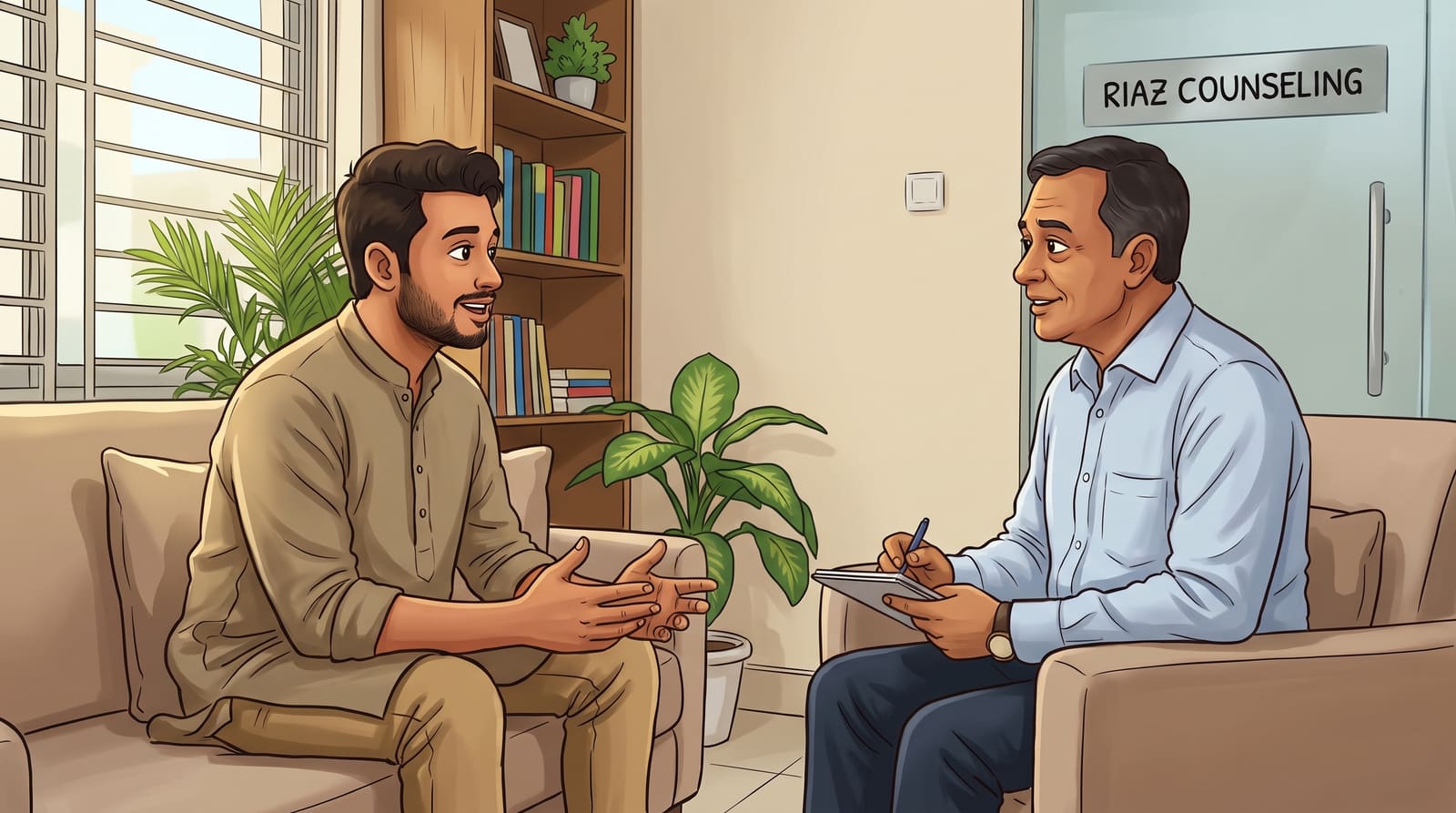
With the right support, men can learn practical relationship skills and work toward more meaningful connections. Riaz Counseling offers counseling services for individuals and couples seeking support with relationship concerns, communication difficulties, and emotional challenges.
Key Highlights
- Healthy relationships depend on mutual respect, trust, communication, and emotional availability.
- Men can strengthen relationships by expressing their feelings, listening actively, and addressing disagreements constructively.
- Work stress, family responsibilities, and unresolved emotional concerns may affect relationships.
- Individual and couples therapy can help people identify unhealthy communication patterns and develop healthier ways of relating.
- Seeking professional support is a constructive step toward building stronger and more fulfilling relationships.
Why Relationships Can Be Challenging for Men
Relationship difficulties do not always develop because two people stop caring about each other. Sometimes, people care deeply but struggle to communicate their needs, manage stress, or understand each other's perspectives.
Men may experience relationship challenges in several areas of life.
1. Difficulty Expressing Emotions
Some men find it difficult to communicate emotions such as sadness, insecurity, disappointment, or fear. They may have learned to handle personal difficulties privately or believe that showing vulnerability makes them appear weak.
However, emotional openness is an important part of building trust. A partner may struggle to understand what someone is experiencing when feelings are consistently hidden or dismissed.
For example, a man experiencing work-related stress might become quiet, impatient, or emotionally distant. His partner may interpret this behavior as a lack of interest, even when the underlying issue is stress rather than dissatisfaction with the relationship.
Learning to communicate feelings more directly can help prevent these misunderstandings.
2. Work Pressure and Financial Responsibilities
Career demands, financial concerns, and family responsibilities can affect how much time and emotional energy someone has available for relationships.
A man who spends most of his day managing workplace responsibilities may return home feeling exhausted. He might unintentionally become less attentive to his partner or children.
Over time, limited communication and reduced quality time can create emotional distance.
Finding a healthier balance between professional responsibilities and personal relationships can help men remain emotionally present with the people who matter to them.
3. Unresolved Arguments and Communication Problems
Disagreements are a normal part of relationships. Problems can develop when disagreements repeatedly involve personal criticism, defensiveness, avoidance, or unresolved resentment.
For example, a couple might argue about household responsibilities every week without discussing why the issue continues to create frustration.
Instead of addressing the underlying concern, both partners may focus on proving who is right.
The American Psychological Association identifies constructive communication, understanding a partner's perspective, and avoiding destructive conflict patterns as important elements of maintaining healthy relationships.
4. Difficulty Balancing Independence and Emotional Connection
Maintaining independence is healthy, but relationships also require time, attention, and shared responsibility.
Some men may prioritize personal interests, friendships, or professional goals without realizing that their partners feel disconnected.
A healthy relationship allows both people to maintain their individual identities while making time for their shared connection.
The goal is not to give up independence. It is to create a balance where both individuals feel valued.
5. Family Expectations and Parenting Responsibilities
Marriage, fatherhood, and family responsibilities can introduce new pressures into a man's life.
Men may find themselves balancing expectations from their partners, children, parents, and professional environments.
Parenting disagreements, differences in family values, and unequal household responsibilities can create tension.
Open conversations about expectations and shared responsibilities can help families work through these challenges together.
10 Practical Ways Men Can Strengthen Their Relationships
Strengthening a relationship does not always require dramatic changes. Consistent, thoughtful actions can gradually improve communication, trust, and emotional connection.
Here are ten practical ways men can begin developing healthier relationships.
1. Practice Open and Honest Communication
Communication involves more than talking about daily responsibilities. It also means sharing thoughts, concerns, expectations, and emotions.
Instead of keeping frustrations to yourself, explain what you are experiencing.
For example, rather than becoming distant after a difficult day, consider saying:
"I've had a stressful day at work, and I may need some time to relax. I still want to spend time with you, but I need a little time to decompress."
This gives your partner a better understanding of your emotional state without making them feel responsible for guessing what is wrong.
Practical tip: Set aside 10–15 minutes each day to talk without distractions. Discuss something beyond work, finances, or household responsibilities.
2. Become a Better Listener
Listening is one of the most valuable communication skills in a healthy relationship.
Sometimes, when a partner shares a concern, the immediate response is to offer advice, explain why something happened, or defend personal decisions.
However, the other person may simply want to feel heard.
Active listening involves giving someone your attention, asking questions, and checking whether you understand their perspective.
Try asking:
- "Can you tell me more about what happened?"
- "How did that make you feel?"
- "What would help you feel supported right now?"
- "Is there something you wish I understood better?"
The NHS recommends active listening and checking your understanding as practical ways to improve communication and strengthen relationships.
3. Learn to Express Emotions Without Becoming Defensive
Emotional awareness allows men to recognize what they are feeling before reacting.
For instance, anger may sometimes develop alongside disappointment, embarrassment, stress, or feeling misunderstood.
Recognizing the emotion underneath a reaction can make it easier to communicate constructively.
Instead of saying:
"You never listen to me."
Try:
"I feel frustrated because I don't think my concerns are being understood. Can we talk about this?"
This approach focuses on expressing an experience rather than assigning blame.
Men do not need to have perfect emotional communication. Developing this skill takes practice, patience, and willingness to learn.
4. Make Quality Time a Priority
Spending time together helps people maintain emotional connections.
Busy schedules can make it easy for relationships to become focused entirely on responsibilities.
Consider introducing small activities that create opportunities for connection:
- Have dinner together without phones.
- Take a walk after work.
- Plan a regular date night.
- Participate in a shared hobby.
- Spend time with children without workplace distractions.
- Check in with your partner about their week.
Quality time does not have to be expensive or complicated. Consistency and genuine attention are often more important than elaborate plans.
5. Take Responsibility for Your Actions
Healthy relationships require accountability from both individuals.
When a disagreement occurs, it can be tempting to focus entirely on what the other person did wrong.
However, strengthening a relationship also requires examining your own behavior.
Ask yourself:
- Did I listen carefully?
- Did I interrupt or dismiss my partner?
- Did I communicate my concerns respectfully?
- Did I make assumptions instead of asking questions?
- Is there something I should apologize for?
Taking responsibility does not mean accepting blame for everything. It means recognizing the parts of a situation that you can control.
A sincere apology should acknowledge the behavior, recognize its impact, and demonstrate a willingness to make a change.
6. Manage Stress Before It Affects Your Relationships
Stress can influence patience, attention, communication, and emotional availability.
When someone is overwhelmed, even ordinary conversations may feel difficult.
Men can work toward managing stress through healthy routines, such as:
- Getting consistent sleep.
- Maintaining regular physical activity.
- Making time for personal interests.
- Practicing relaxation techniques.
- Discussing concerns with trusted people.
- Setting reasonable boundaries around work.
It can also help to communicate when stress is affecting your mood.
For example:
"I'm feeling overwhelmed by some responsibilities right now. I don't want that frustration to affect how I treat you."
Recognizing stress early can create opportunities to address it before it becomes a recurring source of relationship conflict.
7. Respect Boundaries and Individual Needs
Healthy relationships involve understanding that both people have individual needs, preferences, and personal boundaries.
One partner may need time alone after work, while the other may prefer to discuss the day immediately.
Neither preference automatically makes someone wrong.
The important part is finding a respectful balance.
Men can strengthen relationships by asking their partners what helps them feel supported while also communicating their own needs.
Healthy boundaries should not be used to control, punish, or avoid accountability. They help establish expectations that support mutual respect.
8. Show Appreciation Through Everyday Actions
People sometimes assume their partners already know how much they are appreciated.
However, expressing appreciation regularly can help people feel recognized and valued.
Simple actions can make a difference:
- Thank your partner for something they did.
- Acknowledge their efforts at home or work.
- Recognize their personal achievements.
- Express affection in ways they appreciate.
- Notice when they are having a difficult day.
Appreciation should be genuine rather than something offered only during disagreements.
9. Address Problems Instead of Avoiding Them
Avoiding difficult conversations may provide temporary relief, but unresolved concerns can return.
If a particular disagreement keeps happening, consider discussing the underlying issue when both people are calm.
For example, repeated arguments about money may involve different expectations about financial security, spending habits, or long-term goals.
Instead of having the same argument again, discuss what each person needs and explore possible compromises.
If emotions become overwhelming, taking a mutually agreed break and returning to the conversation later can be more productive than continuing an escalating argument.
10. Be Willing to Seek Professional Support
Sometimes, relationship difficulties are connected to deeper emotional concerns, longstanding communication patterns, unresolved experiences, or mental health challenges.
Trying to address everything independently can become frustrating.
Working with a qualified mental health professional may help men better understand their emotions, identify relationship patterns, and develop healthier communication strategies.
Seeking therapy does not mean someone has failed in their relationship. It can be a constructive way to take responsibility for personal growth and relationship well-being.
How Can Men Develop Better Communication Skills?
Communication skills for men are not simply about talking more. They involve understanding emotions, expressing concerns clearly, listening without immediately becoming defensive, and responding respectfully.
Here are several communication techniques that can be practiced in everyday situations.
Use "I" Statements Instead of Blame
An "I" statement communicates how a situation affects you without immediately accusing another person.
| Blaming statement | More constructive statement |
|---|---|
| "You never listen to me." | "I feel unheard when I cannot finish explaining my concerns." |
| "You always criticize me." | "I feel discouraged when our conversations focus mainly on what went wrong." |
| "You don't care about my work." | "I'd appreciate it if we could talk about the pressure I'm experiencing at work." |
| "You make everything difficult." | "I'm feeling overwhelmed, and I'd like us to find a solution together." |
This approach does not guarantee that a disagreement will disappear, but it can make conversations less confrontational.
Avoid Trying to Win Every Argument
A relationship is not a competition.
When the main goal becomes proving that you are right, understanding the other person's concerns can become secondary.
Instead, consider asking:
"What can we both do differently so this situation improves?"
This changes the focus from winning an argument to addressing the problem.
Recognize When a Conversation Needs a Break
Some disagreements become difficult because both people are emotionally overwhelmed.
If you notice yourself raising your voice, interrupting, or struggling to listen, consider suggesting a break.
You might say:
"I want to work through this with you, but I think we need a little time to calm down. Can we continue talking later?"
A break should include an intention to return to the conversation, rather than becoming a way to avoid the issue indefinitely.
Communicate Appreciation and Affection
Communication should not happen only when something goes wrong.
Make a habit of recognizing positive things about your partner and expressing affection.
A relationship needs room for encouragement, humor, shared experiences, and meaningful conversations—not just problem-solving.
How Men Can Strengthen Different Types of Relationships
Not every relationship requires the same approach. The challenges involved in marriage, parenting, friendships, and dating can be different.
Strengthening a Marriage
Marriage often involves balancing emotional needs, finances, parenting, household responsibilities, and individual goals.
Men can support healthier marriages by:
- Discussing expectations openly.
- Sharing household and parenting responsibilities.
- Making time for emotional and physical intimacy.
- Addressing disagreements respectfully.
- Showing appreciation consistently.
- Making important decisions together.
Marriage is an ongoing partnership. Both individuals should feel that their concerns and contributions matter.
Building Stronger Romantic Relationships
In dating and long-term partnerships, emotional availability and trust are important.
Men can strengthen romantic relationships by being honest about their intentions, respecting boundaries, communicating expectations, and demonstrating consistency.
It is also important to understand that healthy relationships involve mutual effort. One person cannot independently create a balanced partnership.
Becoming a More Emotionally Available Father
Fatherhood introduces responsibilities that can affect a man's emotional well-being and family relationships.
Some fathers may find it difficult to balance professional demands with spending meaningful time with their children.
Building stronger parent-child relationships can involve:
- Listening to children's concerns without immediately judging them.
- Participating in everyday activities.
- Showing affection and encouragement.
- Creating consistent family routines.
- Apologizing when mistakes happen.
- Being emotionally present during important moments.
Children benefit from having opportunities to communicate openly and feel supported by their parents.
Maintaining Healthy Friendships
Friendships are also an important part of a man's social and emotional life.
However, some men may find it difficult to maintain friendships as professional and family responsibilities increase.
Making time to check in with friends, discuss personal challenges, and participate in shared activities can help maintain meaningful connections.
Having supportive friendships also means allowing yourself to receive help instead of always feeling responsible for supporting everyone else.
Can Therapy Help Men Strengthen Their Relationships?
Male therapist sits back in chair as male client speaks
Yes. Therapy can help men understand relationship difficulties, recognize unhelpful communication patterns, and develop practical skills for healthier interactions.
Relationship counseling is not exclusively for couples experiencing serious problems. Individuals can also benefit from exploring personal challenges that influence how they communicate and connect with others.
Depending on individual circumstances, therapy may focus on several areas.
Individual Therapy for Relationship Concerns
Individual therapy provides an opportunity to explore personal experiences, emotions, and behaviors that may influence relationships.
A man might consider individual counseling when he:
- Has difficulty expressing emotions.
- Experiences recurring relationship conflicts.
- Struggles with anger or frustration.
- Feels overwhelmed by work or family responsibilities.
- Has difficulty trusting others.
- Wants to improve communication and emotional awareness.
- Is navigating separation, divorce, or another major life transition.
Individual therapy can help clients identify personal goals and explore practical ways to work toward them.
Couples Therapy for Communication and Connection
Couples therapy provides a structured environment where partners can discuss concerns with the guidance of a qualified therapist.
Sessions may focus on:
- Improving communication.
- Understanding recurring disagreements.
- Rebuilding trust after relationship difficulties.
- Discussing emotional needs.
- Addressing intimacy concerns.
- Navigating parenting disagreements.
- Developing healthier conflict-resolution strategies.
The therapist can help both partners understand their interaction patterns and practice different ways of communicating.
Therapy Approaches That May Support Relationship Growth
Different therapeutic approaches may be useful depending on the concerns and goals of the individuals involved.
Cognitive Behavioral Therapy (CBT)
CBT helps individuals identify connections between thoughts, emotions, and behaviors. It may help men recognize assumptions or reactions that contribute to communication difficulties.
Emotionally Focused Therapy (EFT)
EFT focuses on emotional experiences and patterns of connection between partners. It may help couples better understand emotional needs and develop more secure ways of relating.
Attachment-Based Approaches
These approaches explore how earlier relationship experiences may influence trust, emotional closeness, and interactions in adult relationships.
Gottman Method
The Gottman Method is a structured approach to couples therapy that focuses on improving communication, managing conflict, and strengthening friendship and intimacy.
The most appropriate approach depends on the couple's or individual's circumstances. A therapist can help determine which methods may be suitable.
What to Expect From Relationship Counseling at Riaz Counseling
Rebuilding Trust and Connection Through Marriage Counseling
For men considering relationship counseling, the first step can sometimes feel unfamiliar. It is normal to have questions about what happens during therapy and whether discussing personal concerns with a therapist will be comfortable.
At Riaz Counseling, couples therapy is designed to provide a structured setting where partners can discuss relationship concerns, improve communication, and explore ways to strengthen their connection.
According to Riaz Counseling's couples therapy service information, its approach may include the Gottman Method, Emotionally Focused Therapy, Cognitive Behavioral Couples Therapy, and attachment-based approaches.
The process may involve:
- Initial consultation: Discuss your concerns and explore whether the practice and therapist may be a suitable fit.
- Understanding relationship patterns: Explore recurring disagreements, communication challenges, and areas of concern.
- Identifying goals: Establish what you and your partner would like to improve.
- Developing practical skills: Work on communication, listening, emotional understanding, and conflict management.
- Applying what you learn: Practice healthier interactions outside the therapy setting.
Riaz Counseling also provides individual therapy for adults who want to explore personal challenges, emotional well-being, and relationship concerns.
Therapy is a collaborative process, and progress can look different for every individual and couple.
When Should Men Consider Professional Relationship Support?
Not every disagreement requires professional counseling. However, seeking support may be helpful when relationship difficulties become persistent or begin affecting emotional well-being.
Consider speaking with a mental health professional if:
- You and your partner repeatedly have the same arguments.
- Conversations regularly turn into criticism or defensiveness.
- You struggle to communicate your feelings.
- You feel emotionally disconnected from your partner or family.
- Work stress is affecting your personal relationships.
- You are navigating significant changes such as marriage, fatherhood, or divorce.
- You want to understand recurring patterns in your relationships.
- You and your partner want to strengthen your connection before problems become more serious.
It is not necessary to wait until a relationship reaches a breaking point before considering therapy.
Important: Counseling is not a substitute for immediate safety support in relationships involving violence, threats, coercion, or abuse. If someone is in immediate danger, they should seek appropriate emergency assistance. Joint couples counseling may not be appropriate in situations involving abuse or coercive control; individual safety-focused support should be considered.
How Riaz Counseling Supports Men in Houston, Texas
FAQs - Resilience Counseling & Wellness
Finding the right therapist can make it easier to begin addressing relationship concerns.
Riaz Counseling provides mental health counseling services for individuals, couples, and families seeking professional support in the Houston area and across Texas through telehealth.
Men seeking support with relationship challenges may explore:
- Individual therapy for emotional awareness, stress, and personal growth.
- Couples therapy for communication difficulties, trust concerns, and relationship conflicts.
- Family therapy for improving family communication and navigating family-related challenges.
Riaz Counseling has offices in Houston's Galleria area, Sugar Land, and The Woodlands, as well as statewide telehealth services, according to its website.
The practice offers a free 15-minute consultation to help prospective clients explore whether its services may be appropriate for their needs.
Take the first step toward healthier relationships.
Visit Riaz Counseling to learn more about available counseling services or explore Couples Therapy and Individual Therapy.
Frequently Asked Questions
1. How can men strengthen their relationships?
Men can strengthen their relationships by communicating openly, listening actively, expressing emotions, respecting boundaries, managing stress, and making time for meaningful connections. Taking responsibility for personal behavior and addressing disagreements constructively can also help improve relationship quality.
2. Why do some men struggle with emotional communication?
Individual experiences, family environments, cultural expectations, and learned communication habits may influence how men express emotions. Some men may feel uncomfortable discussing vulnerability or asking for support. Developing emotional awareness and practicing open communication can help address these difficulties.
3. Can therapy help men become better partners?
Yes. Individual therapy can help men explore emotional challenges, understand recurring relationship patterns, and develop healthier communication strategies. Couples therapy can also help partners work together on trust, conflict resolution, and emotional connection.
4. Should men attend individual therapy or couples counseling?
It depends on the concerns. Individual therapy may be appropriate when someone wants to explore personal experiences, emotional challenges, or communication habits. Couples therapy may be helpful when both partners want to work together on relationship concerns. A mental health professional can help determine an appropriate starting point.
5. How can men improve communication with their wives or partners?
Men can improve communication by listening without interrupting, expressing feelings using "I" statements, asking questions, avoiding personal criticism, and discussing difficult topics when both partners are ready. Regular conversations and genuine appreciation can also help maintain emotional connection.
6. Can work-related stress affect a man's relationship?
Yes. Work-related stress may contribute to irritability, emotional withdrawal, reduced quality time, and communication difficulties. Recognizing stress and discussing its effects with a partner can help prevent misunderstandings. Individual counseling may also help someone explore healthier ways to manage stress.
7. When should a man seek relationship counseling?
A man may consider relationship counseling when he experiences recurring disagreements, difficulty communicating, emotional distance, trust concerns, or challenges balancing work and family responsibilities. Counseling can also be useful for individuals who simply want to develop healthier relationship skills.
8. Does Riaz Counseling offer relationship therapy for men in Houston?
Riaz Counseling offers couples therapy and individual therapy for people navigating relationship concerns and other emotional challenges. Men can explore these services through the practice's Houston-area offices or available Texas telehealth services. Prospective clients can visit the website to learn about the consultation process.
Conclusion: Building Stronger Relationships Starts With Understanding
Learning how to strengthen relationships for men involves more than changing how someone communicates during an argument. It requires developing emotional awareness, understanding personal responsibilities, respecting boundaries, and making consistent efforts to maintain meaningful connections.
Men do not need to navigate every relationship challenge alone. Learning to express emotions, listen with understanding, and seek support when necessary can contribute to healthier relationships with partners, children, family members, and friends.
Whether you are working through marriage difficulties, experiencing communication problems, or simply hoping to become a more emotionally available partner, personal growth is a worthwhile investment.
Riaz Counseling is committed to supporting individuals and couples as they navigate emotional challenges and work toward healthier relationships. Taking the first step toward counseling can be an opportunity to better understand yourself and build the connections that matter most.
Suggested Internal Links
The following are existing Riaz Counseling pages relevant to this article.
| Suggested anchor text | Destination |
|---|---|
| Couples Therapy in Houston | Couples Therapy |
| Individual Therapy | Individual Therapy |
| Family Therapy | Family Therapy |
| Riaz Counseling Services | Our Services |
| Meet Our Therapists | About Riaz Counseling |
Editorial suggestion: Link the couples therapy page within the section about communication and relationship counseling. Link individual therapy within the section about personal growth and emotional awareness.
Credible Sources and Research References
The following sources support the relationship, communication, and mental health information discussed in this article.
American Psychological Association (APA) — Happy Couples: How to Keep Your Relationship Healthy. Covers communication, constructive disagreements, and maintaining relationship connection.
NHS — Maintaining Healthy Relationships and Mental Wellbeing. Discusses active listening, boundaries, stress, and managing disagreements.
Mental Health Foundation — Top Tips on Building and Maintaining Healthy Relationships. Covers emotional awareness, communication, boundaries, and personal responsibility.
Healthdirect Australia — Building and Maintaining Healthy Relationships. Provides guidance on trust, respect, listening, and emotional connection.
Riaz Counseling — Couples Therapy Services. Used to verify the practice's publicly described couples counseling services and therapeutic approaches.
Riaz Counseling — Individual Therapy Services. Used to verify the practice's publicly described individual counseling services.
Publishing recommendation: Use this as an informational article with a natural pathway to the Couples Therapy and Individual Therapy service pages. The strongest distinguishing feature is its focus on men's everyday relationship challenges, including fatherhood, work-related stress, emotional communication, and personal accountability.
If you feel that you or someone you know may benefit from therapy, please reach out to our office for a FREE 15-minute consultation: LINK.