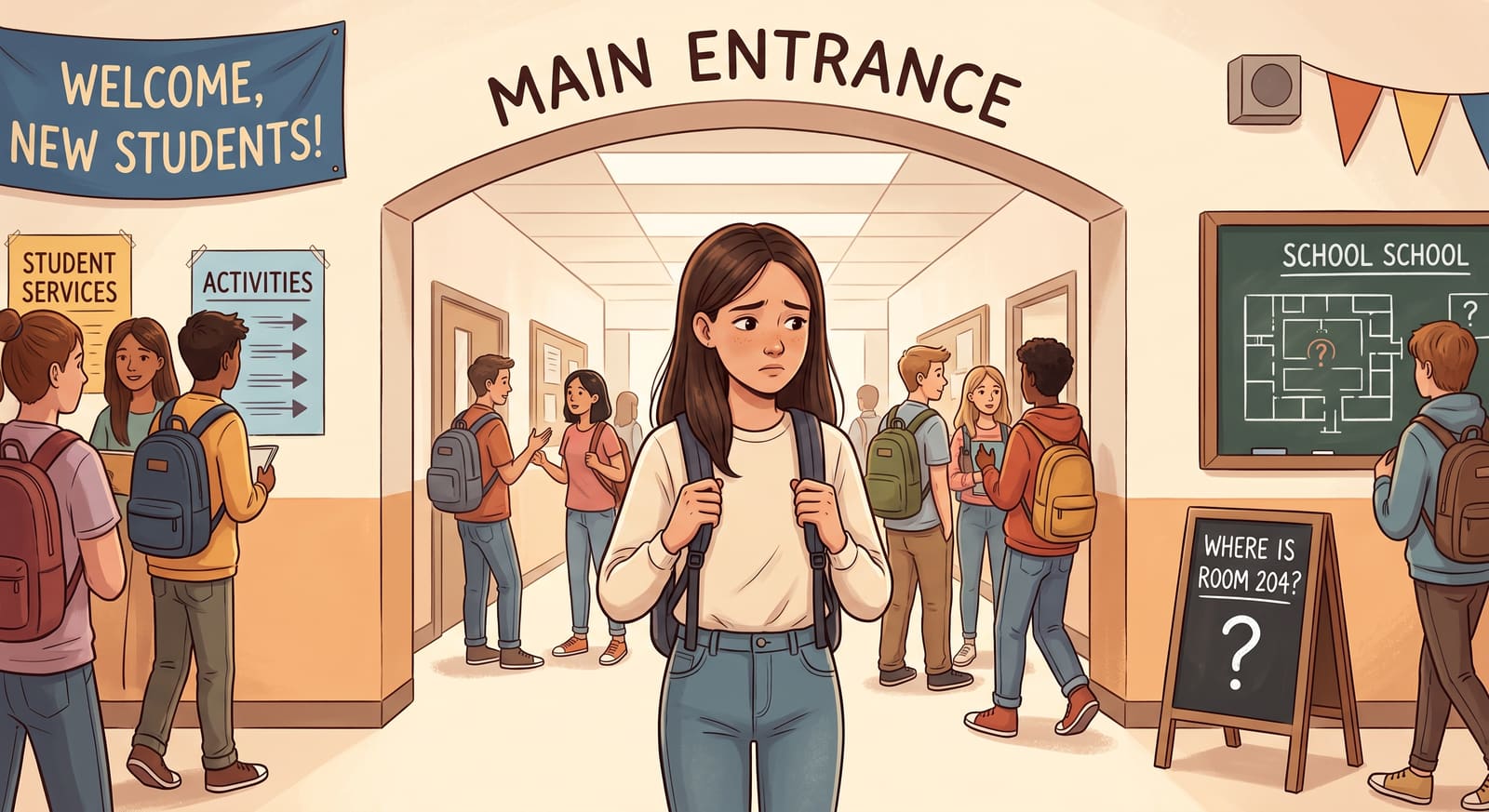
Topic Understanding
Starting at a new school can feel like getting a fresh start. It can also feel uncomfortable, unfamiliar, and lonely.
A student may be learning new routines, meeting unfamiliar classmates, adjusting to different teachers, and trying to understand where they fit socially. Even when the change was necessary or positive, the transition can still be emotionally difficult.
For some students, the adjustment happens gradually. For others, adjusting to a new school can bring significant stress, loneliness, worry, or difficulty feeling connected.
This is where support matters.
Therapy for school transition can give students a private, supportive place to talk about what they are experiencing, understand what may be making the transition difficult, and develop practical ways to cope. It does not replace the support of parents, teachers, school counselors, or friends. Instead, therapy can become one part of a broader support system.
Key Highlights
- Changing schools can affect a student's routines, relationships, sense of belonging, and emotional well-being.
- Feeling connected to school and supportive adults can be an important protective factor for young people's mental health.
- School anxiety, loneliness, or withdrawal may deserve additional attention when they persist or interfere with everyday life.
- Students do not have to immediately make close friends or feel completely comfortable in their new environment.
- Student counseling can provide a safe place to explore adjustment difficulties, anxiety, self-esteem, relationships, and other concerns.
- Riaz Counseling currently provides individual therapy for teenagers and adults and lists Life Transitions, Parenting & Teens, Self-Esteem & Identity, and College & Career Guidance among its areas of specialization.
Why Can Starting at a New School Be So Challenging?
A school transition involves much more than learning a new schedule.
Students may be adjusting to:
- Different teachers and teaching styles
- New academic expectations
- Unfamiliar classmates
- A different school culture
- New rules and routines
- Changes in extracurricular activities
- A longer or shorter commute
- Leaving familiar friends behind
- Finding new social groups
- Changes in family circumstances
- Greater expectations for independence
For a student who previously felt comfortable and confident at school, these changes can temporarily make everyday situations feel much harder.
A student may wonder:
"Where do I fit in?"
"Will anyone want to be friends with me?"
"What if I don't like this school?"
"What if everyone already has their own friends?"
These questions are understandable during a major transition.
School Connectedness Matters
One reason a new school can feel difficult is that students need more than a physical place to attend classes. They also need a sense of connection and belonging.
The CDC defines school connectedness as a student's belief that people at school care about them, their well-being, and their learning. Students who feel connected to school tend to experience better health and well-being outcomes.
Supportive relationships can come from many places:
- Friends
- Teachers
- Coaches
- School counselors
- Administrators
- Parents or caregivers
- Mentors
- Community members
The CDC recommends creating school environments where students feel cared for, supported, and that they belong.
This is especially relevant when a student is new and has not yet developed those relationships.
What Can School Anxiety Look Like?
Not every student will describe their experience as anxiety.
A student might instead say:
- "I don't want to go to school."
- "I hate my new school."
- "Everyone is staring at me."
- "I don't know anyone."
- "I just want to go back to my old school."
- "I don't want to talk to anyone."
- "I'm too nervous to ask questions."
They may also become quieter, avoid activities, or spend more time alone.
Some nervousness during a transition is expected. However, ongoing or intense anxiety that interferes with school attendance, relationships, sleep, concentration, or everyday activities may be a reason to seek additional support.
A mental health professional can help determine what may be contributing to the student's distress rather than assuming that the transition itself is the only cause.
Loneliness After a School Change
A student does not have to be completely alone to feel lonely.
They may sit with classmates at lunch but still feel disconnected. They may talk to people in class but not have anyone they consider a close friend.
This distinction matters.
Loneliness is about how connected a person feels, not simply how many people are physically around them.
A student who has recently changed schools may miss the familiarity of previous friendships while also feeling unsure about forming new ones.
That does not mean they will remain lonely.
It may simply mean that meaningful relationships have not developed yet.
How Can Students Make the Transition Easier?
Therapy can be helpful, but students can also take practical steps to build familiarity and connection.
Start With One Person
Trying to enter an established group can feel overwhelming.
Instead, start with one person.
You could:
- Ask a classmate about an assignment.
- Sit beside someone during lunch.
- Ask about a school activity.
- Invite someone to study together.
- Talk with a teammate after practice.
- Ask a teacher for advice about getting involved.
The goal is not to immediately find a best friend.
The goal is to create an opportunity for connection.
Join Something You Actually Enjoy
Clubs, sports, music, arts, volunteer activities, and other extracurricular programs can create repeated opportunities to interact with the same people.
Choose activities based on genuine interests rather than joining everything simply because you feel pressured to make friends.
Shared interests can make conversations feel more natural.
Keep in Touch With Old Friends
Moving to a new school does not mean previous relationships have to disappear.
If an old friend remains supportive, maintaining that relationship can provide emotional stability while the student develops new connections.
Identify One Supportive Adult
A student does not necessarily need to tell everyone about their struggles.
Finding one trusted adult can be an important first step.
This could be:
- A parent or caregiver
- A teacher
- A school counselor
- A coach
- A relative
- A mentor
- A therapist
The CDC emphasizes the importance of supportive relationships between students, families, and school communities.
When Is Student Counseling Worth Considering?
Not every difficult school transition requires therapy.
Sometimes a student needs time, reassurance, and opportunities to build new relationships.
However, student counseling may be worth considering when adjustment difficulties persist or begin interfering with daily life.
Signs that additional support could be useful include:
- Persistent loneliness
- Frequent school-related worry
- Avoiding school or social situations
- Ongoing sadness
- Significant changes in confidence
- Difficulty concentrating
- Sleep difficulties
- Frequent physical complaints associated with school stress
- Withdrawal from activities the student previously enjoyed
- Difficulty maintaining relationships
- Academic difficulties related to emotional distress
- Feeling overwhelmed by the transition
These signs do not automatically indicate a mental health diagnosis.
They simply suggest that it may be helpful to look more closely at what the student is experiencing.
How Can Therapy for School Transition Help?
Therapy is not about forcing a student to "fit in."
Instead, a therapist can help the student understand the transition and identify practical ways to manage it.
1. Understanding What Changed
A therapist may help the student explore what they miss about their previous school and what feels different now.
For example:
- Did they lose a close friendship?
- Do they feel less confident?
- Is the academic environment different?
- Are they worried about being judged?
- Do they feel excluded?
- Are family circumstances contributing to the transition?
Understanding the specific challenge makes it easier to identify appropriate support.
2. Working Through School Anxiety
A student may know that a situation is not dangerous but still feel extremely nervous about it.
Therapy can provide a space to explore anxious thoughts and patterns of avoidance and develop coping strategies appropriate to the student's situation.
3. Building Confidence
Changing schools can make a previously confident student question themselves.
Therapy can help students examine negative self-beliefs and develop a more balanced understanding of their abilities and relationships.
4. Addressing Loneliness
Loneliness therapy does not mean treating loneliness as a disease.
Instead, therapy can help a student understand why they feel disconnected and explore barriers to building meaningful relationships.
For one student, the barrier may be social anxiety.
For another, it may be low self-esteem.
For someone else, it may be grief over leaving a previous community.
The appropriate focus depends on the individual.
5. Supporting Major Life Transitions
Changing schools can happen alongside other major changes, such as:
- Moving to a new city
- Parents separating
- A change in family structure
- Loss of a loved one
- Changing schools because of bullying
- Entering a new academic environment
- Moving from middle school to high school
- Preparing for college
When several changes happen at once, a student may need more support than the school transition alone would suggest.
What Does Therapy Look Like for a Student?
A student may worry that therapy means sitting in an office and being told what they are doing wrong.
That is not what a collaborative therapy relationship is intended to be.
At Riaz Counseling, individual therapy is described as a one-on-one process with a mental health professional. The practice says sessions typically last 50–55 minutes and may take place weekly or every other week. Its approach includes collaborative goal-setting and practical tools that clients can use between sessions.
A student might begin by saying:
"I don't like my new school."
A therapist may then help explore what that statement means.
Perhaps the student feels:
- Lonely
- Anxious
- Left out
- Homesick
- Academically overwhelmed
- Afraid of rejection
- Uncomfortable in unfamiliar social situations
The goal is to understand the individual experience rather than assuming every student needs the same solution.
What If the Student Does Not Want Therapy?
This is an important consideration for parents and caregivers.
A teenager may resist therapy because they:
- Think they should handle the problem themselves
- Feel embarrassed
- Do not understand what therapy involves
- Worry about being judged
- Are afraid that something is "wrong" with them
- Had a previous negative experience
- Simply do not feel ready
Forcing a conversation can sometimes make the student more resistant.
Instead, parents can explain that therapy is an opportunity to talk with someone outside the immediate family and that asking for support does not mean the student has failed.
It can also help to allow the student to ask questions about what therapy involves.
How Parents Can Support a Student Adjusting to a New School
Parents and caregivers can make a significant difference during a school transition.
Listen Before Trying to Fix the Problem
If your child says, "I hate my new school," you may immediately want to reassure them.
But instead of saying:
"You'll make friends eventually."
try:
"What has been hardest about the new school?"
That question creates room for the student to explain what is actually happening.
Avoid Comparing Them With Other Students
Statements such as:
- "Your brother adjusted quickly."
- "Everyone else seems fine."
- "You just need to be more outgoing."
may unintentionally increase pressure.
Every student adjusts differently.
Help Without Taking Over
Parents can help identify clubs, activities, transportation options, school resources, or supportive adults.
But students may also need opportunities to develop independence and solve some social problems themselves.
Stay Connected With the School
If concerns continue, communication with teachers, counselors, and school staff can help identify additional support.
Schools can play an important role in connecting students with mental health services and other community resources.
When Should a Student Talk With a Mental Health Professional?
Consider professional support when emotional difficulties are persistent, worsening, or interfering with important areas of life.
This may include situations where a student:
- Frequently refuses or wants to avoid school
- Is experiencing significant anxiety
- Has become increasingly withdrawn
- Is persistently sad or hopeless
- Has lost interest in activities
- Is struggling significantly with schoolwork
- Has difficulty sleeping because of school-related distress
- Feels unable to make or maintain relationships
- Is experiencing intense stress related to the transition
- Says they feel unable to cope
The purpose of reaching out is not to label the student.
A qualified professional can help understand the situation and determine whether counseling, school-based support, family involvement, or another form of care may be appropriate.
How Riaz Counseling Can Help Students Adjust
Riaz Counseling currently provides individual therapy for teenagers and adults and identifies Life Transitions, Parenting & Teens, Depression & Anxiety, Self-Esteem & Identity, and College & Career Guidance among its areas of specialization.
These areas can be relevant to students dealing with a major school change, although the appropriate type of support depends on each student's circumstances.
Riaz Counseling currently has three Houston-area offices:
- Houston Galleria
- Sugar Land
- The Woodlands
The practice also offers online therapy statewide for people living in Texas.
For someone considering therapy, Riaz Counseling offers a free 15-minute consultation to discuss fit before beginning individual therapy.
The goal of reaching out does not have to be "fixing" everything immediately. It can simply be taking the first step toward understanding what the student needs.
Frequently Asked Questions
Is it normal to struggle when adjusting to a new school?
Yes. A school transition can involve changes in routines, relationships, academic expectations, and environment. Feeling uncomfortable or lonely during an adjustment period can happen. If the difficulties persist or significantly interfere with everyday life, additional support may be useful.
How long does it take to adjust to a new school?
There is no universal timeline. Some students become comfortable relatively quickly, while others need more time to develop relationships and routines. The quality of the adjustment matters more than meeting a particular deadline.
Can therapy help with school anxiety?
Therapy can help students explore anxiety related to school, social situations, academic pressure, or major changes. A therapist can help identify contributing factors and develop strategies that fit the student's individual needs.
What is loneliness therapy?
"Loneliness therapy" is not a specific diagnosis or single type of treatment. It generally refers to counseling that helps a person understand persistent feelings of disconnection and address factors that may be contributing to them, such as anxiety, self-esteem concerns, relationship difficulties, or life transitions.
Should my child see a school counselor or a therapist?
Either can be an appropriate resource depending on the situation. A school counselor understands the student's school environment and can help connect them with school-based resources. A private therapist can provide individual mental health counseling. Some students may benefit from both.
How can I tell if my child's school adjustment is more than normal stress?
Look at the impact on daily life. Persistent or escalating anxiety, withdrawal, sadness, school avoidance, sleep problems, difficulty functioning, or significant changes in behavior may indicate that additional support is appropriate. A qualified professional can help assess the situation.
What should I ask a therapist before starting?
You might ask:
- Do you work with teenagers or college students?
- What experience do you have with school transitions?
- How do you approach anxiety or loneliness?
- What does a typical session look like?
- How involved are parents or caregivers?
- Do you offer in-person or online sessions?
- What are the expectations around scheduling and communication?
These questions can help determine whether the therapist and approach feel appropriate.
Final Thoughts
A new school can offer a new beginning, but that does not mean the transition will always feel easy.
Students may need time to develop friendships, understand new expectations, and feel that they belong. Supportive relationships at school and at home can make an important difference, and schools themselves can play a meaningful role in helping students build connection.
If a student is struggling, start with listening.
Ask what feels difficult. Help them identify supportive people. Encourage manageable opportunities for connection. And when anxiety, loneliness, or emotional distress begins to interfere with everyday life, consider professional support.
Therapy for school transition is not about making a student become someone they are not. It can provide a safe place to understand the transition, build coping skills, and work toward feeling more comfortable and connected in a new environment.
Riaz Counseling offers individual therapy and support for life transitions, anxiety, self-esteem, and other concerns that may affect students during periods of change.
Mental Health Disclaimer
This article is intended for general educational purposes and is not a diagnosis or substitute for individualized mental health care. Students respond differently to school transitions, and the appropriate type of support depends on their circumstances. A qualified mental health professional can help determine what support may be appropriate.
If a student is experiencing an immediate mental health emergency or is in immediate danger, seek emergency assistance or crisis support rather than relying on information in this article. In the United States, the 988 Suicide & Crisis Lifeline is available by call or text, free and confidential, 24/7.
Sources Used
CDC — School Connectedness Helps Students Thrive: used to verify the definition and importance of school connectedness and its relationship to student health and well-being.
CDC — Safe and Supportive School Environments: used to verify the importance of supportive relationships and connected school environments for students.
CDC — Mental Health: used for information about adolescent mental health, supportive relationships, school resources, and crisis support.
CDC — What Works in Schools: used to verify the role schools can play in connecting students with health and mental health services.
Riaz Counseling — Individual Therapy: used to verify current individual therapy services, teenagers served, life-transition support, session information, and consultation details.
Riaz Counseling — Services: used to verify current therapy services.
Riaz Counseling — Specializations: used to verify Life Transitions, Parenting & Teens, Depression & Anxiety, Self-Esteem & Identity, and College & Career Guidance.
Riaz Counseling — Locations: used to verify the current Houston-area offices and statewide Texas telehealth.
Riaz Counseling — About: used to verify current populations served and practice specializations.
If you feel that you or someone you know may benefit from therapy, please reach out to our office for a FREE 15-minute consultation: LINK.