Topic Understanding
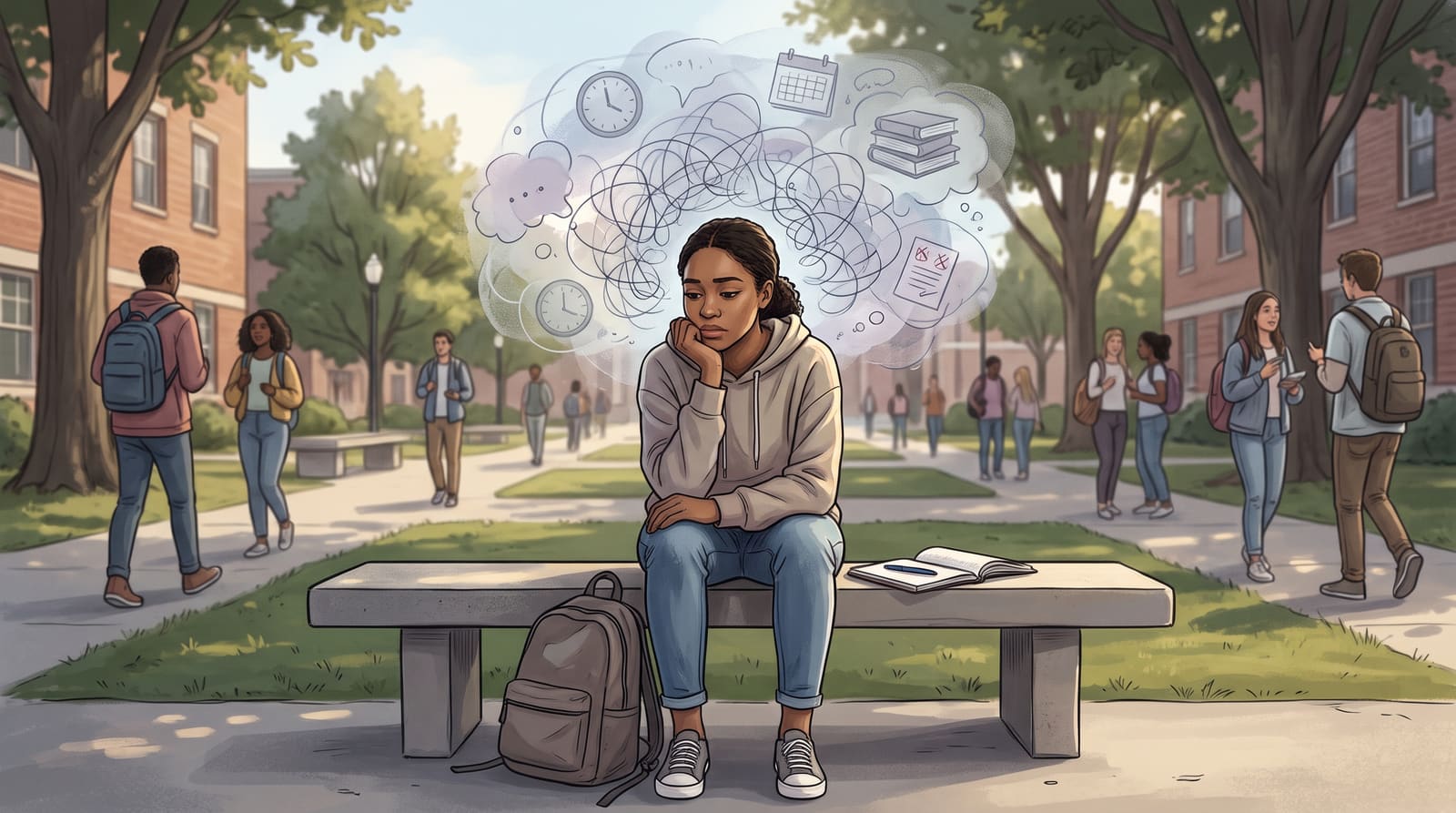
College is often described as an exciting time filled with new opportunities, friendships, independence, and personal growth. But behind those experiences, many students face emotional and psychological challenges that can affect their academic performance, relationships, confidence, and overall well-being.
Managing coursework, meeting deadlines, adjusting to a new environment, maintaining relationships, handling financial responsibilities, and planning for the future can become overwhelming. Some students experience ongoing stress or anxiety, while others struggle with loneliness, depression, burnout, or uncertainty about their identity and goals.
Understanding mental health for college students means looking beyond grades and academic performance. It means recognizing how emotional well-being affects everyday life and knowing when additional support may be helpful.
This article explores common college student mental health challenges, why they occur, how students can recognize signs of distress, and what practical steps can support emotional wellness. It also explains how college counseling and individual therapy may help students navigate this important stage of life.
Key Highlights
- College students may experience anxiety, depression, academic stress, loneliness, financial pressure, relationship difficulties, and uncertainty about the future.
- Mental health challenges can affect concentration, sleep, motivation, relationships, and academic performance.
- Students do not need a diagnosed mental health condition to benefit from talking with a counselor or therapist.
- Practical habits, supportive relationships, campus resources, and professional counseling can all play a role in student emotional wellness.
- Riaz Counseling offers individual therapy and College & Career Guidance, with in-person offices in the Houston area and online therapy for Texas residents.
How Common Are Mental Health Challenges Among College Students?
Mental health concerns are an important part of the college experience for many students.
The 2024–2025 Healthy Minds Study, a large survey involving more than 84,000 students from 135 colleges and universities, found that 37% of participating students reported moderate to severe depressive symptoms and 32% reported moderate to severe anxiety symptoms. Approximately one in four reported feeling isolated from others. These findings describe screening results and self-reported experiences, not confirmed diagnoses for every student.
These findings help illustrate why student emotional wellness deserves attention. They also show that mental health difficulties are not limited to students who are struggling academically or experiencing obvious personal problems.
A student can earn good grades and still experience anxiety. Someone can have an active social life and still feel lonely. Another student may appear confident while privately struggling with pressure, self-doubt, or uncertainty.
Mental health is not always visible from the outside.
What Are the Most Common Mental Health Challenges Among College Students?
College students experience different challenges depending on their circumstances, support systems, personal histories, and stage of education. Some concerns develop gradually, while others become more noticeable during major transitions or periods of increased pressure.
1. Academic Stress and Performance Anxiety
Academic pressure is one of the most recognizable challenges students face.
Exams, assignments, presentations, research projects, competitive programs, and graduation requirements can create a constant sense of responsibility.
For some students, the pressure becomes especially difficult when they connect academic performance with their self-worth.
For example, a student who receives a lower grade than expected might begin thinking:
- "I'm not smart enough to be here."
- "Everyone else is doing better than me."
- "If I fail this class, my future is ruined."
- "I cannot disappoint my family."
These thoughts can make ordinary academic setbacks feel like personal failures.
Academic stress may also contribute to procrastination, difficulty concentrating, disrupted sleep, irritability, and avoidance of assignments.
What may help: Breaking large assignments into smaller tasks, setting realistic expectations, asking instructors for clarification, and learning practical ways to manage anxiety can make academic responsibilities feel more manageable.
If fear of failure or perfectionism continues interfering with daily life, counseling may provide an opportunity to explore those patterns.
2. Anxiety and Constant Worry
College can introduce students to situations that feel unfamiliar or unpredictable.
They may worry about grades, finances, friendships, relationships, internships, career choices, or whether they are making the right decisions.
Some anxiety is a normal response to new responsibilities. However, persistent or overwhelming anxiety can interfere with everyday functioning.
Possible signs include:
- Excessive worrying about different areas of life
- Feeling restless or constantly on edge
- Difficulty relaxing
- Racing thoughts
- Trouble concentrating
- Sleep difficulties
- Avoiding situations that create fear
- Physical tension or discomfort
For example, a student might repeatedly worry about an upcoming presentation, even after preparing thoroughly. The worry may become so distracting that studying, sleeping, or enjoying other activities becomes difficult.
Anxiety can also influence decision-making. Students may avoid opportunities because they are afraid of making mistakes or being judged.
What may help: Identifying worry patterns, practicing grounding techniques, breaking difficult situations into manageable steps, and seeking support when anxiety becomes persistent can help students respond more effectively.
3. Depression and Loss of Motivation
Depression is more than feeling sad after a difficult day or receiving disappointing academic results.
It can affect mood, energy, interest, concentration, sleep, appetite, relationships, and the ability to manage everyday responsibilities.
A college student experiencing depression may:
- Lose interest in hobbies or social activities
- Feel persistently sad, empty, or hopeless
- Struggle to get out of bed
- Have difficulty concentrating on assignments
- Withdraw from friends and family
- Experience changes in sleep or appetite
- Feel worthless or excessively guilty
- Find everyday tasks unusually difficult
Depression does not always look the same for everyone. Some students may continue attending classes and completing assignments while privately experiencing significant emotional distress.
It is important not to assume that a student is simply lazy, unmotivated, or unwilling to work hard.
If these experiences persist or interfere with daily functioning, a qualified health professional can help assess what may be happening and discuss appropriate support.
4. Loneliness and Difficulty Building Connections
College can place students in a new social environment.
Even when a campus is full of people, students may struggle to find meaningful friendships or feel that they belong.
This can happen when someone:
- Moves away from family and familiar friends
- Finds it difficult to approach new people
- Feels excluded from social groups
- Has trouble adjusting to campus culture
- Experiences a breakup or friendship conflict
- Feels different from the people around them
Loneliness and social isolation are related, but they are not identical. A student can spend time with classmates and still feel emotionally disconnected.
The CDC identifies loneliness as the feeling of being alone or disconnected, while social isolation involves limited relationships, contact, or support. Both can affect health and well-being.
What may help: Joining a student organization, attending a small campus activity, reconnecting with trusted people, or finding a community based on shared interests can create opportunities for connection.
Students who experience persistent loneliness may also benefit from talking with a counselor about social anxiety, self-esteem, relationship patterns, or adjustment difficulties.
5. Financial Stress and Uncertainty
College expenses can create emotional pressure that extends beyond tuition.
Students may worry about housing, transportation, textbooks, food, student loans, employment, and supporting themselves while studying.
Financial concerns can become especially difficult when students are balancing classes with part-time or full-time work.
For example, a student who works late shifts to cover expenses may have less time for sleep, studying, exercise, or social activities. Over time, competing responsibilities can contribute to exhaustion and stress.
Financial stress is not simply an individual time-management problem. It can be connected to broader circumstances, including family resources, employment opportunities, housing, and access to support.
What may help: Students can explore financial aid offices, scholarship opportunities, student assistance programs, budgeting resources, and academic support services. Asking for practical help is not a personal failure.
When financial pressure is also affecting mood, sleep, or relationships, mental health support may be useful alongside financial guidance.
6. Relationship and Family Expectations
College often changes how students relate to friends, romantic partners, parents, and family members.
Students may experience:
- Conflict with parents about academic or career decisions
- Pressure to meet family expectations
- Long-distance relationship difficulties
- Breakups or friendship changes
- Challenges setting boundaries
- Differences in personal values or independence
- Difficulty balancing relationships with academic responsibilities
Family expectations can be particularly complicated when students feel responsible for fulfilling hopes that others have placed on them.
A student might want to choose a particular major but feel pressured to pursue another path. Another may struggle to communicate a need for independence without feeling guilty.
What may help: Learning to communicate clearly, understand personal boundaries, and approach difficult conversations thoughtfully can support healthier relationships.
Therapy can also offer a space to explore the emotional impact of family expectations, relationship conflict, and major life decisions.
7. Burnout and Emotional Exhaustion
College students sometimes try to manage too many responsibilities at once.
Between classes, studying, work, extracurricular activities, internships, family responsibilities, and social commitments, there may be little time to rest.
Burnout-like experiences can include:
- Feeling emotionally exhausted
- Losing motivation
- Becoming increasingly frustrated
- Feeling disconnected from academic responsibilities
- Struggling to concentrate
- Feeling that even small tasks require too much effort
These experiences can overlap with stress, anxiety, depression, sleep difficulties, or physical health concerns. Burnout should not be used as a substitute diagnosis for symptoms that need professional assessment.
What may help: Reviewing commitments, setting realistic priorities, protecting time for rest, and asking for support can help students identify what needs to change.
If exhaustion continues despite efforts to reduce pressure, it may be helpful to speak with a health professional.
Why Do College Students Experience These Challenges?
There is rarely one explanation for student mental health difficulties.
A student's emotional well-being may be influenced by several factors that interact with one another.
Major Life Transitions
Starting college, changing schools, moving away from home, or entering a new academic program can involve significant adjustments.
Students may need to develop new routines, navigate unfamiliar social environments, and take on responsibilities they did not previously manage.
Even positive transitions can involve uncertainty and emotional pressure.
Academic and Career Expectations
Students may feel pressure to maintain high grades, select the right major, graduate on time, secure internships, and find employment.
When students believe that one decision will determine their entire future, uncertainty can become especially stressful.
Limited Support Systems
Some students leave behind family members, friends, mentors, or communities that previously provided emotional support.
Building new relationships takes time, and not everyone finds that process easy.
Personal and Family Circumstances
Family conflict, relationship difficulties, grief, discrimination, past traumatic experiences, and ongoing health concerns can also affect student well-being.
These experiences do not disappear simply because someone begins college.
Financial and Environmental Pressures
Housing concerns, employment demands, transportation difficulties, and limited access to resources may add pressure to an already demanding schedule.
The CDC explains that mental health is influenced by individual, family, community, and broader social factors. This is an important reminder that emotional well-being cannot always be understood through individual behavior alone.
How Mental Health Challenges Can Affect Academic Performance
Mental health and academic performance can influence one another.
A student experiencing anxiety may struggle to concentrate during lectures. Someone dealing with depression may find it difficult to begin assignments or maintain motivation. Persistent stress can interfere with sleep and make it harder to manage responsibilities.
This can create a difficult cycle:
- A student experiences emotional distress.
- Concentration, sleep, or motivation becomes more difficult.
- Academic responsibilities begin to accumulate.
- The student feels more pressure or guilt.
- Increased pressure makes emotional distress harder to manage.
This cycle does not mean that every academic difficulty is caused by a mental health concern.
Students may also face challenges involving teaching methods, workload, learning differences, financial circumstances, or other practical barriers.
It can be helpful to consider both academic and emotional support rather than treating them as competing options.
For example:
- An academic advisor can help with course planning and degree requirements.
- A tutoring center can provide subject-specific assistance.
- A career center can help with internships, resumes, and career exploration.
- A therapist can help address emotional concerns such as anxiety, depression, stress, and relationship difficulties.
These services can work alongside one another.
How Can College Students Take Care of Their Mental Health?
Supporting student emotional wellness does not require changing every part of life at once.
Small, realistic adjustments can help students create routines that are easier to maintain.
1. Create a Manageable Weekly Schedule
A schedule can help students see where their time is going and identify periods of excessive pressure.
Try to include:
- Class and study hours
- Work responsibilities
- Meals
- Sleep
- Exercise or movement
- Social activities
- Breaks and personal time
Avoid filling every available hour. A schedule that leaves no room for rest may become difficult to maintain.
2. Set Realistic Academic Goals
Instead of focusing only on the final grade, identify smaller actions that move you toward your academic goals.
For example:
- Read one chapter before starting another.
- Work on an assignment for a focused period.
- Ask a question when instructions are unclear.
- Start preparing for an exam before the last few days.
- Divide a large project into smaller deadlines.
Progress is not always linear, and one difficult semester does not define a student's ability or future.
3. Maintain Meaningful Connections
Try to maintain contact with people who provide encouragement and understanding.
This could involve calling family, meeting a friend for coffee, joining a student organization, or participating in a community activity.
If building friendships feels difficult, start with manageable interactions rather than expecting yourself to become socially confident immediately.
The CDC recommends taking small steps to strengthen social connections, including checking in with others and creating opportunities for meaningful relationships.
4. Protect Your Sleep and Physical Well-Being
Sleep, nutrition, and physical activity are important parts of overall well-being.
Students can try to:
- Maintain a consistent sleep and wake schedule.
- Avoid making all-night studying a regular habit.
- Eat regular meals when possible.
- Incorporate movement into the day.
- Take breaks during long study sessions.
- Make time for activities that help them relax.
These habits do not replace mental health treatment, but they can support a more sustainable daily routine.
5. Learn to Recognize Personal Stress Signals
Students may not always recognize when stress is becoming difficult to manage.
Pay attention to changes such as:
- Becoming unusually irritable
- Avoiding messages or social interactions
- Feeling overwhelmed by small responsibilities
- Experiencing ongoing sleep difficulties
- Losing interest in activities
- Having trouble concentrating
- Feeling constantly worried
Noticing these changes can help students decide when to adjust their routine, speak with someone they trust, or seek professional support.
6. Take Breaks From Constant Comparison
Social media can make it seem as though everyone else is enjoying college, maintaining perfect grades, building friendships, and planning a successful future.
But online posts rarely show the full picture of someone's life.
Comparing your everyday experiences with another person's selected highlights can contribute to unnecessary pressure.
Consider limiting online activity when it leaves you feeling inadequate, anxious, or disconnected.
Your college experience does not need to look exactly like someone else's.
When Should a College Student Consider Professional Mental Health Support?
Students do not have to wait until they are unable to attend classes or manage daily responsibilities before seeking help.
Talking with a qualified professional may be useful when emotional difficulties become persistent, distressing, or disruptive.
Consider seeking support if you notice:
- Persistent sadness, hopelessness, or emotional distress
- Anxiety that feels difficult to control
- Ongoing sleep or appetite changes
- Loss of interest in activities
- Increasing social withdrawal
- Difficulty concentrating or completing responsibilities
- Relationship problems that feel overwhelming
- Emotional distress connected to a major life transition
- Feeling unable to manage everyday stress
The National Institute of Mental Health recommends considering how symptoms affect daily life. It advises seeking professional help when severe symptoms persist for two weeks or longer, particularly when they interfere with normal activities. Students should seek help sooner if symptoms are severe or they feel unsafe.
Seeking support does not mean someone has failed to handle college.
It means recognizing that emotional well-being deserves attention just as much as academic and physical health.
What Is College Counseling, and How Can It Help?
College counseling generally refers to counseling or mental health support that addresses concerns students experience during their educational years.
It can involve academic-related stress, anxiety, depression, relationships, self-esteem, loneliness, family expectations, and major life transitions.
Counseling does not have to be limited to students with a diagnosed mental health condition. A student may simply want a supportive place to understand their feelings, develop coping strategies, or work through a difficult decision.
The NHS similarly notes that students experiencing relationship problems, low mood, stress, or anxiety may benefit from talking with a counselor, even when they do not have a diagnosed mental health condition.
What Might Students Discuss During Therapy?
The topics depend on the student's needs and goals.
A student might discuss:
- Anxiety about grades or examinations
- Feeling disconnected after moving away from home
- Family expectations and personal boundaries
- Relationship difficulties
- Low confidence or self-esteem
- Uncertainty about a major or career
- Depression or ongoing emotional distress
- Difficulty managing competing responsibilities
The therapist and student can work together to identify priorities and decide what kind of support may be appropriate.
What Happens During an Initial Therapy Appointment?
The first appointment is generally an opportunity to discuss what brings someone to therapy.
Depending on the provider and service, the conversation may include:
- Understanding the concern: What has been difficult recently?
- Discussing personal context: Are school, family, relationships, or other circumstances contributing?
- Identifying goals: What would the student like to understand, change, or manage?
- Considering an approach: What type of therapy or support may be appropriate?
- Planning next steps: How will progress and future sessions be approached?
Students can ask questions about confidentiality, session format, fees, scheduling, and the therapist's experience before deciding whether to continue.
Therapy should be a collaborative process in which students have an opportunity to express their concerns and participate in decisions about their care.
How Riaz Counseling Supports College Students
Riaz Counseling provides individual therapy for people navigating concerns such as anxiety, depression, stress, trauma, and major life transitions. These concerns may overlap with the emotional challenges students experience during college.
The practice also lists College & Career Guidance as a specialization. This service focuses on self-discovery and informed decision-making about education and career paths. It may be relevant for students experiencing decision paralysis, uncertainty about the future, or anxiety about academic and career choices.
Depending on a student's needs, counseling may provide an opportunity to explore:
- Academic and performance-related anxiety
- Depression and low motivation
- Stress and emotional overwhelm
- Self-esteem and confidence
- Relationship and family concerns
- Life transitions
- College and career decisions
In-Person and Online Therapy Options
Riaz Counseling currently has three Houston-area offices:
- Houston Galleria: 5353 W Alabama St STE 570, Houston, TX 77056
- Sugar Land: 1600 Hwy 6 STE 130, Sugar Land, TX 77478
- The Woodlands: 2001 Timberloch Pl Suite 500, The Woodlands, TX 77380
The practice also offers online therapy for people living in Texas.
For students balancing classes, employment, and personal responsibilities, the choice between in-person and online therapy may depend on location, schedule, preferences, and clinical needs.
Riaz Counseling currently offers a free 15-minute consultation, which provides an opportunity to discuss concerns and explore whether the practice may be a suitable fit.
How Parents, Friends, and Families Can Support College Students
Students are not always comfortable explaining when they are struggling.
Sometimes, a change in behavior may be the first indication that someone needs support.
Parents, friends, and family members can help by creating an environment where students feel comfortable talking honestly.
Listen Without Immediately Offering Solutions
A student who shares a concern may not be asking someone to fix everything.
Sometimes, they need someone to listen without judgment.
Instead of saying, "You just need to work harder," try asking:
- "What has been feeling most difficult lately?"
- "How have you been managing everything?"
- "Is there something you wish you had more support with?"
- "Would it help to talk through your options?"
Avoid Comparing Their Experience With Others
Statements such as "Everyone goes through this" or "Your friends are doing fine" may make a student feel that their concerns are being dismissed.
Each student's circumstances are different.
Acknowledging their experience does not mean agreeing with every thought or decision. It means showing that their feelings are worth understanding.
Encourage Support Without Applying Pressure
If a student appears to be struggling, you can gently suggest campus counseling, a healthcare provider, or an independent therapist.
Offer practical help if appropriate, such as helping them find contact information or understand available services.
The goal is to make support easier to access, not to make the student feel judged or forced.
Frequently Asked Questions
1. What are the most common mental health challenges among college students?
Common concerns include academic stress, anxiety, depression, loneliness, financial pressure, relationship difficulties, low self-esteem, and uncertainty about the future. Students may experience one concern or several at the same time.
2. Why is mental health important for college students?
Mental health can influence concentration, motivation, sleep, relationships, decision-making, and the ability to manage academic and personal responsibilities. Supporting emotional well-being can help students navigate college more effectively and recognize when they need additional support.
3. Can college students benefit from therapy even without a mental health diagnosis?
Yes. Students may seek therapy to discuss stress, relationships, family expectations, self-esteem, life transitions, or difficult decisions. A diagnosed condition is not a requirement for wanting professional guidance.
4. How can students manage academic stress?
Students can try creating realistic schedules, dividing large assignments into smaller tasks, protecting sleep, taking breaks, asking for academic assistance, and setting manageable goals. If stress becomes persistent or overwhelming, counseling may provide additional support.
5. What is the difference between college counseling and academic advising?
Academic advising generally focuses on educational requirements, course selection, degree planning, and graduation progress. Mental health counseling focuses on emotional and psychological concerns such as anxiety, depression, stress, relationships, and adjustment difficulties. Students may benefit from both.
6. How can a student know when to seek mental health support?
Consider professional support when emotional symptoms persist, worsen, or interfere with school, relationships, sleep, or daily responsibilities. Students can also seek help earlier if they feel overwhelmed or want guidance navigating a difficult situation.
7. Does Riaz Counseling offer therapy for college students?
Riaz Counseling offers individual therapy for concerns such as anxiety, depression, stress, and life transitions. The practice also lists College & Career Guidance as a specialization. Students can discuss their needs during an initial consultation to explore whether the available services are appropriate.
8. Does Riaz Counseling offer online therapy in Texas?
Yes. Riaz Counseling lists online therapy for people living in Texas, in addition to in-person offices in Houston Galleria, Sugar Land, and The Woodlands.
Conclusion
College can be a time of opportunity, independence, and personal growth, but it can also bring emotional challenges that are not always easy to recognize or discuss.
Academic pressure, anxiety, depression, loneliness, financial concerns, relationship difficulties, and uncertainty about the future can all affect student well-being. These experiences deserve attention rather than being dismissed as an unavoidable part of college life.
Supporting mental health for college students involves more than encouraging better grades or improved time management. It means creating space for emotional support, healthy relationships, realistic expectations, and access to professional care when needed.
Students do not have to navigate every challenge alone. Whether the next step involves speaking with someone they trust, using campus resources, or exploring individual therapy, asking for support is a meaningful step toward better emotional wellness.
College is an important part of life, but a student's well-being matters more than any single grade, semester, or achievement.
Mental Health Disclaimer
This article is intended for general educational purposes and is not a substitute for professional mental health care, diagnosis, or medical advice. Mental health symptoms can have different causes, and a qualified health professional can help determine what support may be appropriate.
If a student is experiencing thoughts of suicide or self-harm, or is in immediate danger, they should seek urgent support. In the United States, call or text 988 for the Suicide & Crisis Lifeline. For a life-threatening emergency, call 911 or go to the nearest emergency department.
Suggested Internal Links
- Individual Therapy at Riaz Counseling — Link when discussing therapy for anxiety, depression, stress, and life transitions.
- Depression & Anxiety Therapy — Relevant to students experiencing persistent worry, low mood, or emotional distress.
- College & Career Counseling — Relevant to students navigating academic decisions, career uncertainty, and future planning.
- Riaz Counseling Specializations — Provides an overview of the practice's areas of support.
- Riaz Counseling Locations — Useful for students seeking in-person therapy in the Houston area or online therapy in Texas.
- How Riaz Counseling Can Help Students Manage College Stress — Related reading for students experiencing academic pressure.
- How Riaz Counseling Supports College Students Struggling With Depression — Related reading for students exploring depression support.
- Loneliness in College: Tips for Building Connection and Getting Support — Relevant to students experiencing isolation or difficulty forming friendships.
Credible Sources Used
UCLA Fielding School of Public Health and University of Michigan — 2024–2025 Healthy Minds Study: National college student mental health findings.
National Institute of Mental Health (NIMH) — My Mental Health: Do I Need Help? Guidance on recognizing symptoms, daily functioning, and seeking professional help.
Centers for Disease Control and Prevention (CDC) — Managing Stress: Information about stress, its effects, and practical coping strategies.
CDC — Health Effects of Social Isolation and Loneliness: Definitions and health implications of loneliness and social isolation.
CDC — Improving Social Connectedness: Practical guidance on building meaningful relationships.
National Health Service (NHS) — Counselling for Student Mental Health Problems: How counseling may support students experiencing stress, anxiety, low mood, and relationship concerns.
Riaz Counseling — Individual Therapy: Current services and information about the therapy process.
Riaz Counseling — College & Career Counseling: Current practice specialization and service description.
Riaz Counseling — Therapy Locations: Current Houston-area offices and online therapy information.
If you feel that you or someone you know may benefit from therapy, please reach out to our office for a FREE 15-minute consultation: LINK.