Topic Understanding
Planning a wedding involves many decisions, from choosing a venue to organizing finances and deciding where to live. But preparing for a marriage involves more than planning a wedding day. It also means understanding each other's expectations, learning how to handle disagreements, and discussing the responsibilities you will share as a couple.
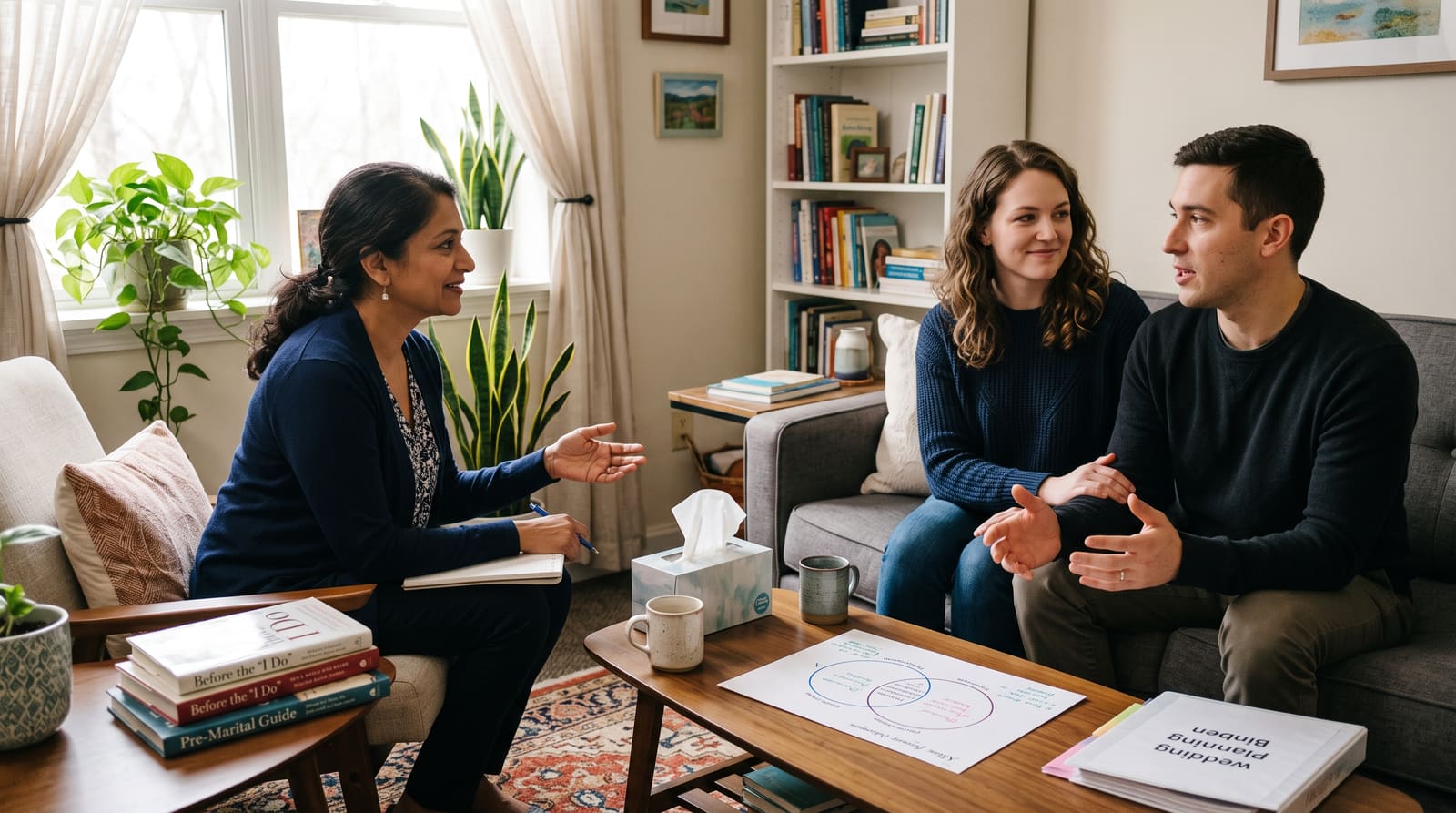
Premarital counseling gives couples a structured space to prepare for married life before the wedding. With the help of a qualified therapist, partners can explore their communication styles, discuss sensitive topics, recognize potential differences, and develop practical ways to navigate challenges together.
Premarital counseling is not only for couples experiencing problems. It can also be valuable for partners who feel secure in their relationship and want to build a strong foundation for the future.
For couples preparing for marriage, understanding the premarital counseling benefits can help them decide whether professional guidance is a useful part of their preparation.
Key Highlights
- Premarital counseling helps couples discuss important topics such as communication, finances, family expectations, intimacy, and future goals.
- It provides opportunities to practice healthy conflict resolution and understand differences before they become recurring sources of tension.
- Research suggests that relationship education can improve communication skills, although evidence for lasting improvements in relationship satisfaction is more mixed.
- Couples do not need to be in crisis to seek counseling. It can be a proactive way to prepare for married life.
- Riaz Counseling offers couples therapy for premarital couples preparing for marriage, with in-person offices in the Houston area and online therapy for Texas residents.
What Is Premarital Counseling?
Premarital counseling is a form of relationship counseling designed to help engaged couples or partners planning to marry prepare for the transition into married life.
During sessions, a therapist helps both partners explore their expectations, understand their relationship patterns, and discuss topics that may influence their future together.
Depending on the couple's needs, sessions may focus on:
- Communication and listening
- Managing disagreements
- Financial expectations and spending habits
- Household responsibilities
- Family relationships and boundaries
- Emotional and physical intimacy
- Parenting and decisions about children
- Cultural, religious, or personal values
- Career goals and life transitions
- Trust, commitment, and shared expectations
The process is not about deciding whether a couple is perfect for marriage. It is about helping partners have meaningful conversations, identify areas that need attention, and make informed decisions about their relationship.
The American Psychological Association has highlighted premarital counseling as an opportunity for couples to develop communication and conflict-resolution skills and discuss subjects such as finances, intimacy, family relationships, and expectations for marriage.
Why Does Premarital Counseling Matter Before Marriage?
A relationship can feel strong while partners are dating, yet still contain unanswered questions about what married life will look like.
For example, one partner might expect to manage money jointly, while the other prefers to maintain separate accounts. One might imagine living near their parents, while the other expects to move to another city. Both partners may assume they agree about having children without ever discussing the subject in detail.
These differences do not necessarily mean the relationship is unhealthy. They do mean that assumptions should be discussed rather than left unexamined.
Premarital counseling can help couples recognize these differences and practice approaching them with curiosity, honesty, and respect.
1. It Encourages Clearer Communication
Communication is more than exchanging information. It also involves explaining feelings, listening without immediately becoming defensive, asking questions, and making sure both partners understand what the other is trying to say.
Sometimes couples get caught in a pattern where one person raises a concern, the other feels criticized, and the conversation turns into an argument. The original issue may never get resolved.
Premarital counseling can help partners recognize these patterns and practice different ways of communicating.
For example, instead of saying:
"You never listen to me."
A partner might try:
"I feel dismissed when I am explaining something important and the conversation changes before I finish. Could we take a few minutes to talk about it?"
The second statement describes a specific experience and invites discussion rather than making a broad accusation.
Research reviews have found that premarital and relationship education programs can improve couples' communication skills, although outcomes vary by program and study.
2. It Helps Couples Manage Conflict More Constructively
Disagreements are a normal part of close relationships. Partners have different personalities, needs, experiences, and preferences, so they will not always see situations in the same way.
The goal is not to eliminate every disagreement. It is to learn how to handle disagreements without relying on insults, threats, prolonged avoidance, or attempts to control the other person.
A premarital therapist may help couples explore questions such as:
- What happens when we disagree?
- Does either of us shut down or withdraw?
- Do we interrupt or talk over each other?
- Can we take a break when emotions become overwhelming?
- How do we return to a conversation after taking space?
- Can we acknowledge each other's feelings without agreeing on everything?
Imagine one partner wants to resolve a disagreement immediately, while the other needs time to calm down. Without understanding this difference, the first person may interpret the pause as rejection, while the second may experience continued discussion as pressure.
Counseling can help couples create an approach that respects both needs, such as agreeing to take a break and return to the conversation at a specific time.
3. It Brings Financial Expectations Into the Open
Money can represent more than spending power. It may also be connected to independence, security, family responsibilities, personal values, and past experiences.
Couples may have different ideas about saving, debt, supporting relatives, making large purchases, or sharing expenses.
Premarital counseling can provide a setting for discussing these expectations without treating differences as evidence that one partner is wrong.
Consider discussing:
- How will we divide household expenses?
- Will we combine our finances, keep them separate, or use a combination?
- What debts or ongoing financial commitments should we understand?
- How much should we save for emergencies?
- What purchases should require a joint decision?
- How do we feel about lending or giving money to relatives?
- What financial goals do we want to work toward?
A therapist is not a substitute for a qualified financial adviser. However, a therapist can help partners communicate about money, understand the emotions behind financial disagreements, and develop a more collaborative way to make decisions.
4. It Helps Clarify Expectations About Family and Boundaries
Marriage can change how people relate to parents, siblings, extended family, and friends.
In some families, frequent visits and shared decisions are expected. In others, independence and privacy are emphasized. Neither approach is automatically right for every couple, but unspoken expectations can create tension.
Premarital counseling may help partners discuss:
- How often they expect to visit family
- How they will spend holidays
- What information about the marriage should remain private
- How to respond when relatives disagree with their decisions
- Whether family members will be involved in major choices
- How to balance family traditions with creating new ones
For example, imagine one partner expects every major holiday to be spent with their parents, while the other wants to alternate between families or create traditions of their own.
Discussing this before marriage gives the couple an opportunity to explore options instead of facing the same disagreement every holiday.
5. It Creates Space to Discuss Children and Parenting
Decisions about children can have a major effect on a couple's future. Partners may have different expectations about whether to have children, when to have them, and how they would approach parenting.
These conversations can include:
- Whether both partners want children
- Preferred timing, if applicable
- Parenting values and discipline
- Expectations about childcare
- How parenting responsibilities might be shared
- How careers and family life could fit together
- What support may be available from relatives or other caregivers
Not every question will have a simple answer. Some decisions may evolve over time, and some circumstances cannot be predicted.
However, understanding each other's current perspectives can help couples recognize where they agree, where they differ, and what needs further discussion.
6. It Supports Conversations About Intimacy
Intimacy can include emotional closeness, affection, trust, physical connection, and sexual expectations. Partners may have different comfort levels, communication styles, or expectations about how intimacy changes over time.
Premarital counseling can create a respectful setting to discuss subjects that may feel awkward to raise independently.
Depending on the couple's needs, topics may include:
- How each partner expresses affection
- What helps each person feel emotionally close
- How to communicate needs and boundaries
- Expectations about physical intimacy
- How to discuss changes in desire or connection
- How to approach sensitive conversations without shame or blame
The aim is not to pressure either partner to agree to something that makes them uncomfortable. Healthy intimacy requires mutual respect, consent, and the ability to communicate openly.
7. It Helps Couples Understand Their Personal Histories
People bring their past experiences into their relationships, including what they learned about love, conflict, trust, and family life.
For example, someone who grew up in a home where disagreements were avoided may find direct conversations uncomfortable. Someone whose family argued frequently may become anxious when a partner raises a concern, even if the conversation is calm.
Premarital counseling can help partners understand how these experiences may influence their present relationship.
This does not mean blaming families or assuming that past experiences determine the future. It means recognizing patterns that may affect how partners respond to one another and deciding which habits they want to keep or change.
What Topics Should Couples Discuss Before Marriage?
A useful way to prepare for marriage is to review several areas of life together. You do not need identical opinions on everything. You do need a way to talk about differences and make decisions that respect both partners.
Here is a practical discussion guide you can use before or during premarital counseling.
| Topic | Questions to discuss |
|---|---|
| Communication | How do we want to handle disagreements and difficult conversations? |
| Finances | How will we budget, save, manage debt, and make large purchases? |
| Family | What boundaries and expectations do we have with relatives? |
| Children | Do we want children, and what are our current parenting expectations? |
| Careers | How will we make decisions about work, relocation, and career changes? |
| Household responsibilities | How will we divide chores, planning, and everyday tasks? |
| Intimacy | How can we discuss affection, physical connection, and boundaries respectfully? |
| Values | Which personal, cultural, spiritual, or religious values are important to each of us? |
| Independence | How much time do we want for friends, hobbies, and individual interests? |
| Future plans | What does a fulfilling life together look like to each of us? |
These questions are starting points, not a test. If a conversation becomes difficult, take time to understand why the topic feels sensitive instead of forcing an immediate agreement.
Is Premarital Counseling Only for Couples With Problems?
No. Premarital counseling can be useful even when a couple feels happy, connected, and confident about getting married.
One common misconception is that seeking counseling means a relationship is in trouble. In reality, some couples seek it because they want to prepare intentionally for a major life transition.
Premarital counseling can be relevant for couples who:
- Want to strengthen communication before marriage
- Have different family or cultural backgrounds
- Are blending families or navigating previous marriages
- Have recurring disagreements they want to understand
- Want to discuss finances and future responsibilities
- Feel nervous about the transition into married life
- Want a neutral setting for conversations they find difficult
- Simply want to build stronger relationship skills
Counseling is not a guarantee of marital success, and it cannot resolve every difference. Its value lies in helping couples better understand their relationship and approach important decisions more thoughtfully.
A meta-analysis of premarital education programs found mixed results for relationship satisfaction but evidence that these programs can improve couple communication. This is an important distinction: learning useful relationship skills is a meaningful goal, but counseling should not be presented as a guarantee of a lasting or conflict-free marriage.
What Happens During Premarital Counseling?
The process varies according to the therapist's approach and the couple's goals. In general, sessions provide a structured opportunity for both partners to share their perspectives, discuss concerns, and work on relationship skills.
The first session: Understanding your relationship
A therapist may ask how you met, what you value about your relationship, what brings you to counseling, and what you hope to gain from the process.
You may discuss strengths as well as areas where you want more clarity.
It is helpful to be honest about your expectations, even if you are unsure how to explain them.
Exploring important topics
Subsequent sessions may focus on communication, conflict, finances, family relationships, intimacy, or future goals.
The therapist may ask questions that help you understand why a subject matters to each of you. They may also help you notice patterns in the way you discuss difficult topics.
Practicing relationship skills
Depending on the approach used, a therapist may help you practice active listening, expressing concerns clearly, identifying emotional triggers, or working toward mutually acceptable decisions.
You may also agree to have specific conversations between sessions and reflect on what you learned.
Creating a plan for continued growth
By the end of a course of counseling, couples may have a clearer understanding of their strengths, unresolved questions, and the skills they want to keep practicing.
There is no universal number of sessions that every couple needs. The appropriate length depends on the couple's goals, the therapist's approach, and the issues being discussed.
How to Get the Most Out of Premarital Relationship Counseling
You do not have to prepare perfect answers before your first appointment. However, a little reflection can make sessions more productive.
Be honest rather than trying to appear like the perfect couple
It is understandable to want a therapist to see the best in your relationship. But avoiding every difficult subject can limit what you learn.
Try to describe your actual concerns respectfully. You can acknowledge that you love your partner while also admitting that certain conversations are difficult.
Listen to understand, not just to respond
When your partner describes a concern, try to understand what they mean before preparing a defense.
You might ask, "Can you help me understand what that feels like for you?" or "What would make this situation feel better?"
Understanding a partner's perspective does not require agreeing with every statement.
Talk about specific situations
Broad statements such as "We never communicate" can make it difficult to identify what needs to change.
Instead, describe a specific situation. For example: "When we discuss our budget, we both become frustrated and stop talking about it. I want us to find a better way to work through those conversations."
Specific examples help turn a general complaint into a problem you can explore together.
Allow room for differences
You and your partner do not need to share every preference, habit, or opinion.
The goal is to understand which differences can be accommodated, which require compromise, and which involve important values or future decisions that need more discussion.
Some conversations may take more than one session. That is not necessarily a sign of failure.
Choose a therapist who is a good fit for both of you
Look for a qualified mental health professional with experience in couples or premarital counseling. Ask about their approach, how they structure sessions, and how they help couples address disagreements.
It is reasonable to ask questions before committing to ongoing sessions.
When Should Couples Consider Professional Support?
You do not need to wait until a disagreement becomes a major relationship problem before seeking support.
Premarital counseling may be particularly useful when conversations about finances, children, family boundaries, intimacy, or future plans repeatedly lead to frustration or avoidance.
It can also help if one or both partners feel uncertain about how to express their needs or resolve disagreements.
If there are serious concerns involving coercion, threats, intimidation, or violence, safety should come first. Standard couples counseling may not be appropriate in situations involving abuse or fear. Consider seeking confidential guidance from a qualified professional who understands relationship safety and can help you explore suitable options.
Counseling should support each person's ability to make informed, voluntary decisions—not pressure either partner into marriage or into accepting harmful behavior.
How Riaz Counseling Can Help Couples Prepare for Marriage
Riaz Counseling provides couples therapy for partners who want to improve communication, navigate conflict, rebuild trust, and strengthen their connection. Its couples therapy service specifically identifies premarital couples preparing for marriage as one group it serves.
For couples preparing for marriage, working with a therapist can provide a structured space to discuss expectations, recognize relationship patterns, and develop practical communication tools.
Riaz Counseling lists approaches to couples therapy that include the Gottman Method, Emotionally Focused Therapy (EFT), Cognitive Behavioral Couples Therapy, and attachment-based approaches. The therapist can help determine which approach is appropriate for a couple's goals and circumstances.
Riaz Counseling has in-person offices in Houston Galleria, Sugar Land, and The Woodlands, and offers online therapy for people living in Texas.
If you and your partner are preparing for marriage, you can explore whether couples counseling is a good fit by scheduling a free 15-minute consultation through Riaz Counseling.
The first step does not have to involve a major problem. It can simply be a decision to invest time in understanding one another before beginning the next chapter of your lives.
Frequently Asked Questions About Premarital Counseling
1. What are the main benefits of premarital counseling?
Premarital counseling can help couples communicate more clearly, manage disagreements constructively, discuss finances and family expectations, clarify future goals, and understand one another's needs. Research suggests relationship education can improve communication, although it does not guarantee long-term relationship satisfaction.
2. When should we start premarital counseling?
There is no single ideal timeline. Couples can start when they begin seriously planning for marriage or when they recognize topics they would like to discuss with professional guidance. Starting before a particular wedding deadline may give you more flexibility to explore difficult questions without feeling rushed.
3. How many premarital counseling sessions do couples need?
The number varies. Some couples may want a brief, focused series of sessions, while others may need more time to explore complex concerns or practice new skills. Ask the therapist how they typically structure premarital counseling and whether the plan can be tailored to your goals.
4. Does premarital counseling mean our relationship has problems?
No. Many couples seek counseling proactively because they want to prepare for marriage and strengthen their relationship skills. It can be useful even when partners feel close and committed.
5. What should we talk about before getting married?
Consider discussing communication, conflict resolution, money, family relationships, household responsibilities, children, intimacy, values, careers, and long-term goals. The most important conversations are those that help you understand each other's expectations and make informed decisions together.
6. Can premarital counseling help if we have different values or backgrounds?
It can help partners understand how their backgrounds and values influence their expectations. Counseling may support respectful discussions about family traditions, religion, culture, finances, and future plans. It cannot guarantee that every difference will be resolved, but it can help couples explore whether and how they can navigate those differences together.
7. Is premarital counseling the same as marriage counseling?
They overlap, but their focus may differ. Premarital counseling generally emphasizes preparation, communication skills, and expectations before marriage. Marriage counseling may address these same areas as well as ongoing conflict, changes in the relationship, trust concerns, or other difficulties that arise during marriage.
8. Does Riaz Counseling offer premarital counseling in Houston?
Riaz Counseling's couples therapy service identifies premarital couples preparing for marriage as people it serves. The practice has offices in Houston Galleria, Sugar Land, and The Woodlands, as well as online therapy for Texas residents. Couples can contact the practice to discuss their needs and determine whether its services are a good fit.
Conclusion: Preparing for Marriage Starts With Understanding Each Other
Preparing for marriage is about more than organizing a wedding. It is also an opportunity to understand your partner's expectations, discuss important decisions, and develop ways to handle challenges together.
Premarital counseling gives couples a place to have those conversations with professional guidance. It can help you practice communication, explore differences, and approach married life with greater awareness of each other's needs and goals.
You do not have to wait until your relationship is struggling to ask for support. Choosing to prepare thoughtfully can be a meaningful step toward building a partnership grounded in respect, honesty, and shared responsibility.
If you and your partner are preparing for marriage, consider whether premarital counseling could help you begin this next chapter with more clarity and confidence.
Sources Used
- American Psychological Association (APA) — Premarital counseling: A vital, untapped niche. Background on communication skills, conflict resolution, and common topics addressed in premarital counseling.
- Fawcett et al., Family Relations (2010) — Do Premarital Education Programs Really Work? A Meta-analytic Study. Review of evidence on relationship satisfaction and communication outcomes.
- Hawkins et al. / review of couple relationship education research (2022) — Review of research and developments in relationship education programs.
- Riaz Counseling — Couples Therapy in Houston, TX. Current information on premarital couples, therapy approaches, session expectations, and consultation.
- Riaz Counseling — Therapy Locations. Current information about Houston-area offices and online therapy in Texas.
Editorial note: Evidence for premarital education is encouraging in some areas, particularly communication, but results are not uniform. This article therefore presents counseling as a potential resource for preparation and skill-building, not as a guarantee of marital success.
If you feel that you or someone you know may benefit from therapy, please reach out to our office for a FREE 15-minute consultation: LINK.