Introduction
The suburban landscape of Sugar Land, Texas, just southwest of the Houston metroplex, is widely celebrated for its rich diversity, excellent schools, and vibrant community life. It is also home to one of the most prominent, established, and dynamic Muslim populations in the United States. From the bustling community hubs and mosques scattered across Fort Bend County to the quiet residential neighborhoods, faith and family serve as foundational pillars of daily life.
However, living at the intersection of a deeply rooted faith tradition and the rapid pace of modern suburban American life can introduce unique psychological pressures. For many individuals and families within the community, finding a space to address emotional and psychological struggles can feel like an isolating battle. When severe worry hits, many Muslims find themselves caught in an painful tug-of-war: wanting top-tier clinical care but fearing that a secular therapist might misunderstand their religious values, or that their community might view their struggle as a spiritual failure.
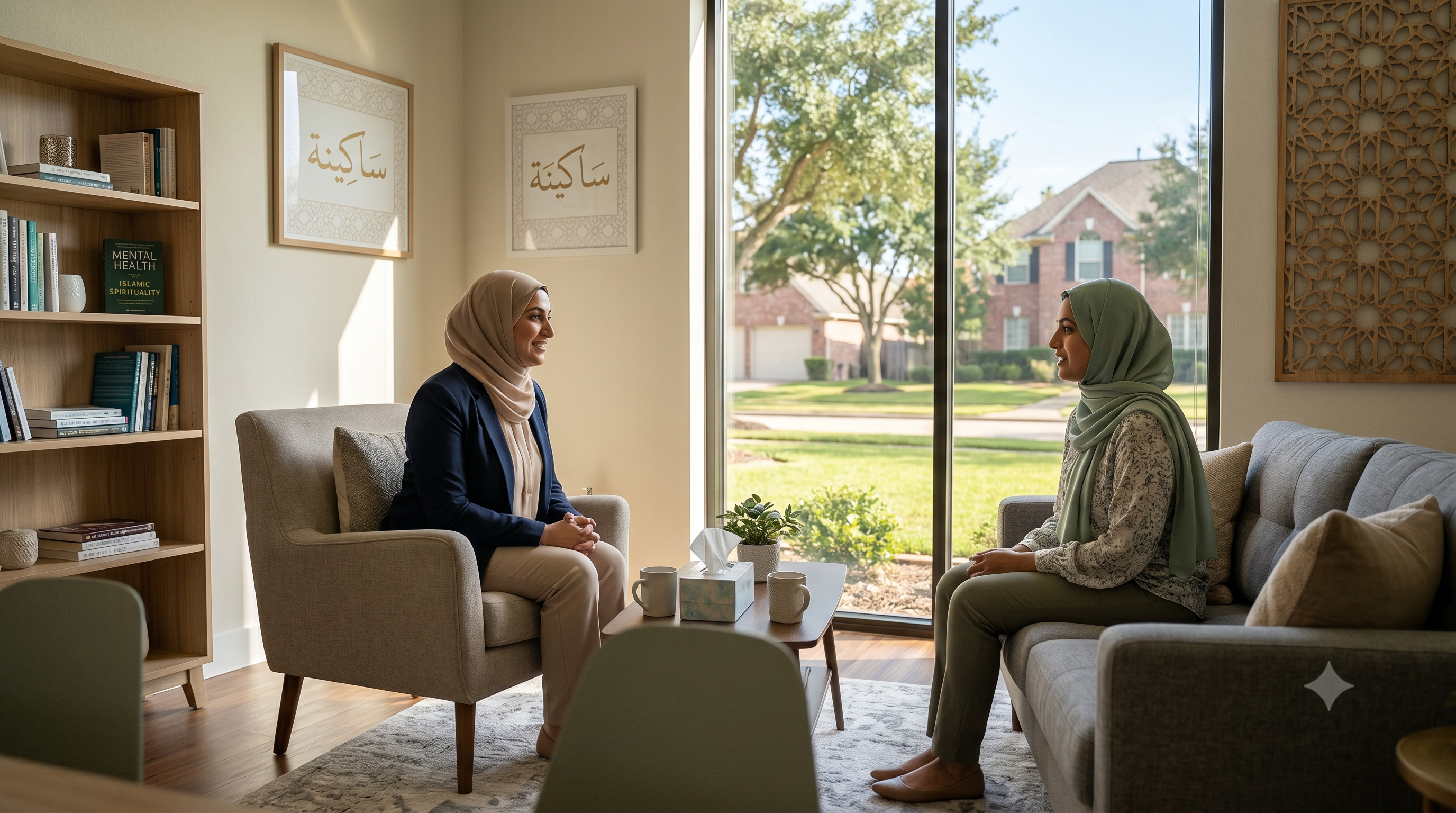
At Riaz Counseling, we believe that true healing occurs when medical accuracy meets spiritual and cultural alignment. Mental health struggles—including generalized anxiety and panic—are not a reflection of a spiritual deficit or a lack of Iman (faith). Rather, they are complex human experiences that deserve professional, compassionate, and evidence-based care. This comprehensive guide takes a deep dive into how Islamic counseling for anxiety in Sugar Land, TX, bridges the gap between clinical excellence and cultural honor to bring true Sakinah (tranquility) back to your life.
What is Islamic Counseling for Anxiety?
Islamic counseling is a holistic therapeutic approach that integrates gold-standard Western psychological practices with Islamic principles and spirituality. It addresses the human psyche through a multi-dimensional framework that includes the mind, the body, and the Nafs (the soul or self).
When dealing with anxiety, traditional secular therapy may overlook the profound comfort a client derives from their relationship with Allah, or misinterpret religious practices as compulsive behaviors. Conversely, purely spiritual advice may ignore the physiological and cognitive mechanisms of an anxiety disorder. At Riaz Counseling, Islamic counseling marries these two worlds. We provide medically accurate psychological treatment while utilizing the client's faith as a primary catalyst for resilience, meaning, and recovery.
Recognizing the Signs: How Anxiety Manifests
Anxiety is more than just occasional stress; it is a persistent state of hyper-vigilance that reshapes your daily routines and drains your vitality. At Riaz Counseling, we encourage Sugar Land residents to look for these common clinical indicators across three primary categories:
1. Physical Symptoms: The Body Holding Tension
When the brain perceives a chronic threat, the sympathetic nervous system floods the body with stress hormones. Somatic manifestations often include:
- Chronic Muscle Tension: Tightness in the jaw, neck, and shoulders, frequently causing tension headaches.
- Sleep Disruptions: Experiencing the "tired but wired" phenomenon—feeling physically exhausted but unable to quiet a racing mind at night.
- Gastrointestinal Distress: Nausea, cramping, or irritable bowel syndrome (IBS), fueled by the strong biochemical connection between the gut and the brain.
- Palpitations and Shallow Breathing: A sudden tightening of the chest that can mimic medical emergencies.
2. Cognitive and Emotional Symptoms: The Internal Noise
Anxiety highjacks your executive function, leaving you trapped in distressing thought loops:
- Persistent Rumination (Waswas): Constant intrusive thoughts, replaying past conversations, or obsessing over future worst-case scenarios.
- Analysis Paralysis: Spending so much energy weighing every possible outcome of a decision that you become entirely paralyzed.
- Irritability and a Short Fuse: Snapping at loved ones or coworkers because your psychological bandwidth is fully consumed by internal stress.
3. Behavioral Symptoms: The Strategy of Avoidance
To cope with the distress, individuals often alter their behavior in ways that temporarily relieve anxiety but reinforce it long-term:
- Social Withdrawal: Canceling plans at the last minute to avoid the perceived energy drain of social interaction at local community events.
- Procrastination: Putting off high-stakes tasks at work because the anxiety of potential failure feels too heavy to confront.
The Root Causes: Unique Stressors Facing the Sugar Land Community
Anxiety is universal, but the environmental, cultural, and professional backdrop of Fort Bend County and the Greater Houston area adds distinct layers of pressure. In our clinical practice at Riaz Counseling, we have identified several local variables that uniquely fuel anxiety:
The Professional Pressure Cooker and Stigma
Sugar Land is home to an exceptionally driven, highly educated Muslim population, with a heavy concentration of families working in corporate leadership, engineering, IT, and the Texas Medical Center. This environment can foster intense pressure to project an image of effortless perfection. High-achieving youth and adults alike often experience severe anxiety and perfectionism, fearing that any sign of emotional struggle will be viewed as a lack of gratitude or a disgrace to their family standing.
Generational Disconnect and Bicultural Identity Stress
First- and second-generation Muslim youth in Sugar Land frequently experience acculturation stress. They are tasked with navigating a complex bicultural identity—attempting to honor the traditional, collectivist values of their parents while simultaneously fitting into the individualistic culture of modern American schools and workplaces. This can manifest as chronic guilt and isolation when personal needs or mental health realities clash with family expectations.
The Commute and Logistical Burnout
The physical layout of the Houston metroplex means many Sugar Land residents face long, high-stress daily commutes on Highway 59, the Sam Houston Tollway, or the Grand Parkway to reach their offices or clinics. This structural gridlock strips away precious hours from rest, family connection, and spiritual reflection, keeping the nervous system in a chronic state of fight-or-flight before any interpersonal stressors are even introduced.
Practical Solutions: Blending Clinical Tools with Spiritual Remedies
While overcoming a clinical anxiety disorder requires navigating deeper psychological patterns with a professional therapist, you can begin implementing these practical, evidence-based strategies today to help regulate your nervous system:
1. Sensory Grounding: The 5-4-3-2-1 Technique
When anxiety triggers a rapid spiral—whether you are stuck in Fort Bend traffic or overwhelmed by family obligations—you must pull your brain out of future-oriented worry and back into the physical present. Use your five senses to anchor your mind:
- Identify 5 things you can see around you.
- Identify 4 things you can physically feel (e.g., the texture of your clothing, the steering wheel).
- Identify 3 distinct things you can hear.
- Identify 2 things you can smell.
- Identify 1 thing you can taste.
2. Reframe Mental Health Care as an Act of Sunnah
In Islamic tradition, your body and mind are an Amanah (a sacred trust) from the Creator. Taking care of your mind is an intentional preservation of the self. Seeking treatment, utilizing clinical strategies, and setting boundaries to protect your mental health is a proactive fulfillment of that trust, not a betrayal of it. Early Muslim scholars treated psychological ailments as medical realities, and seeking a remedy is a beautiful reflection of the prophetic tradition.
3. Transform Prayer (Salah) into a Mindful Anchor
Anxiety thrives on speed and distraction. Use your daily prayers as an intentional psychological boundary. Before beginning, practice slow, diaphragmatic belly breathing for two minutes to activate your parasympathetic nervous system (the "rest and digest" mode). Slow down your movements during prayer, focusing entirely on the physical sensations of each posture and the meaning of the words, transforming a daily obligation into a sanctuary of mindfulness.
How Riaz Counseling Supports Muslim Mental Health
If you are tired of wearing a mask of perfection and are ready to address your anxiety in a safe, completely confidential environment, Riaz Counseling is here to stand by your side. We have designed our practice specifically to cater to those who want top-tier clinical expertise without having to explain, defend, or compromise their religious identity.
Our Specialized, Integrative Approach to Anxiety
Our clinical team integrates gold-standard, evidence-based psychological modalities with a deep respect for Islamic values:
- Cognitive Behavioral Therapy (CBT): We work with you to identify and dismantle the deeply ingrained "thought traps" (such as all-or-nothing thinking or catastrophizing) that fuel your anxiety, replacing them with balanced, realistic truths.
- Internal Family Systems (IFS): We help you explore the different "parts" of your personality—such as the hyper-critical part that demands perfection or the anxious part that carries family expectations—helping you lead your life from a place of core calm, compassion, and confidence.
- Marital and Family Counseling: We offer a neutral, highly professional, and strictly confidential space for couples and families to learn healthy boundary-setting, communication tools, and conflict-resolution strategies that preserve family honor while protecting individual well-being.
Seamlessly Accessible to the Fort Bend Community
We recognize that your schedule is demanding, and the logistics of Houston life can sometimes make seeking therapy feel like an added stressor. To ensure care is highly accessible, Riaz Counseling offers:
- Secure, HIPAA-Compliant Telehealth: Receive premium clinical care from the comfort of your private office in Sugar Land, your home, or anywhere across the state of Texas.
- Warm In-Person Office Settings: Safe, quiet environments designed to let you unplug from the ambient noise of suburban life and focus entirely on your growth.
- Support Across the Lifespan: From adolescents finding their footing in school to working professionals and seniors on Medicare Advantage navigating late-life adjustments, we provide specialized tracks of care for every generation.
Moving Toward Sakinah: The Long-Term Impact of Healing
The ultimate goal of Islamic counseling at Riaz Counseling is to help you transition from a state of exhausting hyper-vigilance to a state of Sakinah—the deep, tranquil peace mentioned in the Quran. When you give yourself permission to heal, the positive effects ripple outward. You become a more emotionally present parent, a more empathetic spouse, a clearer thinker in your professional career, and a more resilient member of the Sugar Land community.
Investing in your mental health does not mean turning your back on your culture or your faith; it means peeling back the layers of trauma, stress, and cultural stigma to step into the truest, healthiest version of who you were created to be.
Conclusion: Reclaim Your Peace with Riaz Counseling
To the Muslim community of Sugar Land and Greater Houston, Texas: your emotional pain is real, it is valid, and it does not have to be carried alone. You do not have to choose between your clinical health and your spiritual values. You can have both.
At Riaz Counseling, we are deeply honored to serve as your partner on this path toward wholeness. We provide the medical accuracy, the supportive framework, and the cultural alignment you need to silence the noise, dismantle the stigma, and reclaim your internal peace.
Are you ready to begin your journey toward lasting emotional wellness? Contact Riaz Counseling today to schedule a private, completely confidential consultation. Let’s work together to bring clarity back to your mind and balance back to your life.
Frequently Asked Questions (FAQs)
Will my therapist at Riaz Counseling judge my level of religious practice?
Absolutely not. At Riaz Counseling, we practice with radical empathy, clinical professionalism, and unconditional positive regard. Our role is to provide a supportive, non-judgmental space to help you heal, completely respecting where you are on your unique personal and spiritual path.
Is virtual therapy as effective as in-person sessions for anxiety?
Yes. Extensive clinical research demonstrates that telehealth yields identical therapeutic outcomes to in-person care for anxiety, depression, and family dynamics. It also offers the added benefits of heightened privacy, zero commute stress, and maximum scheduling flexibility.
Does Riaz Counseling accept health insurance or Medicare Advantage?
Yes, we are fully committed to making professional, culturally competent mental health care accessible to our community. Riaz Counseling accepts several prominent health insurance options, including specific Medicare Advantage plans. Please reach out to our intake team directly to seamlessly verify your specific coverage options.
If you feel that you or someone you know may benefit from therapy, please reach out to our office for a FREE 15-minute consultation: LINK.